Just a sneak peek at what’s to come…
 From Mike Nelson’s More things (To the memory of Honoré de Balzac) at Matt’s Gallery.
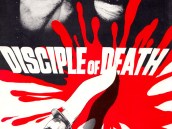 Familial History (Sculpture, Film and Horror): a Q&A with Darren Banks
 Five Questions on Horror & Architecture: AIDA RUILOVA
 Aldo Tambellini – Making the Void Visible
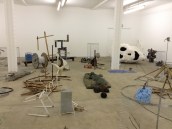 Mike Nelson: “More things (To the Memory of Honore de Balzac)”
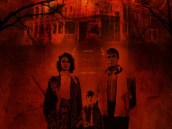 Burnt Offerings: the vampiric house
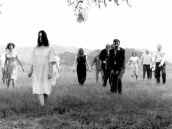 Night of the Living Dead: Annotated Palace Collection
 Cry Me a River: Darren Banks’ I’m sure if there were a monster in the midlands we would have seen it on the telly
 Fallen Light: Mario Bava and Bas Jan Ader
 How to Explain Pictures to a Dead Hare
 The Art of Fear: Bluebeard
Just a sneak peek at what’s to come…
From Mike Nelson’s More things (To the memory of Honoré de Balzac) at Matt’s Gallery.
Spending time with ghosts. Simon Starling using the cinematic lens to evoke the artwork ghosts of Duveen Galleries past for his Commission 2013, Phantom Ride. Past and present converge in this haunting installation at Tate Britain where previous commissions by Pablo Picasso, Chris Burden, Douglas Gordon, Fiona Banner, Martin Creed (amongst others) come back from the “dead” to live again in the 300 foot long cavernous space. This architectural space (designed by Romanie-Walker and Gilbert Jenkins) was the first public gallery designed for sculpture in England when they opened in 1937 and has become a portal from which history emerges into our contemporary lives.
Images from James Aldridge’s recent solo exhibition, Presence, at David Risley Gallery in Copenhagen…
In Aldridge’s work a tension between the real and fantastic is revealed and establishes a compelling psychological space. The conventions of landscape representation are abandoned in these paintings — horizons disappear and gravity and orientation fail to obey the usual rules. Yet connections between these birds, plants and other animals and the landscape remain, conjuring a strangely atmospheric result. Tension lies in the interplay between decorative and beautiful elements and the implied violence of dripping or vomited blood and nightmarish mutated mandalas.
James Aldridge is included in an exhibition I’m curating at Mark Moore Gallery this June called Empty Distances that explores blackness and the void in contemporary art as influenced by horror.
In 2010 I visited The Coral Reef. It is a non-place, a construction, a fictional other-space housed within the reality of an art museum. Non-linear, abandoned, and claustrophobic. Dirty. No other artwork has ever made my heart pound and my palms sweat.
Here is artist Mike Nelson talking about the re-installation of The Coral Reef at Tate Britain (where I saw it).

Ways of seeing: the fearful role of art in Rod Serling’s NIGHT GALLERY
Rod Serling television post-Twilight Zone adventure, Night Gallery, is revolutionary in its usage of art (paintings, sculpture, and art-informed language) as the portal from which its frightful narrative emerges. With each introduction our curator (Serling) shows the audience an artwork that contains, reveals, and is born from the horror story we are about to witness. Here, artwork functions as a way to tell the kinds of stories deemed “unbelievable” or “unreal” – what Night Gallery proposes is that the real is elastic, subjective to our supernatural experiences, and housed within artworks.
Culling often from H.P. Lovecraft (in fact, many episodes are direct visualizations of his stories), Night Gallery shows a speculative reality that places imagined horrors into the realm of the real. Particularly in the beginning of the series, before Serling’s control over production waned, the episodes were present-day narratives in which past actions have otherworldly consequences. In this way Night Gallery is a clear extension of The Twilight Zone, its younger sister functioning as an unfolding morality play to reflect that what we do, the choices we make, matter and affect. It is a fantastical mode of expression for an popular-culture entertainment vehicle such as a television series to ground itself within visual art and to have artwork speak to its viewer. It is a statement that art has the potential for substantive power. Therefore, Night Gallery challenges a notion of how we see, not just artworks or television, but the world around us.
Night Gallery launched as a television movie on November 8, 1969 telling three tales of horror: The Cemetery, Eyes, and The Escape Route. Below I will discuss how each episode embodies the role of artworks and viewership in its depiction of social, political, and personal terrors.
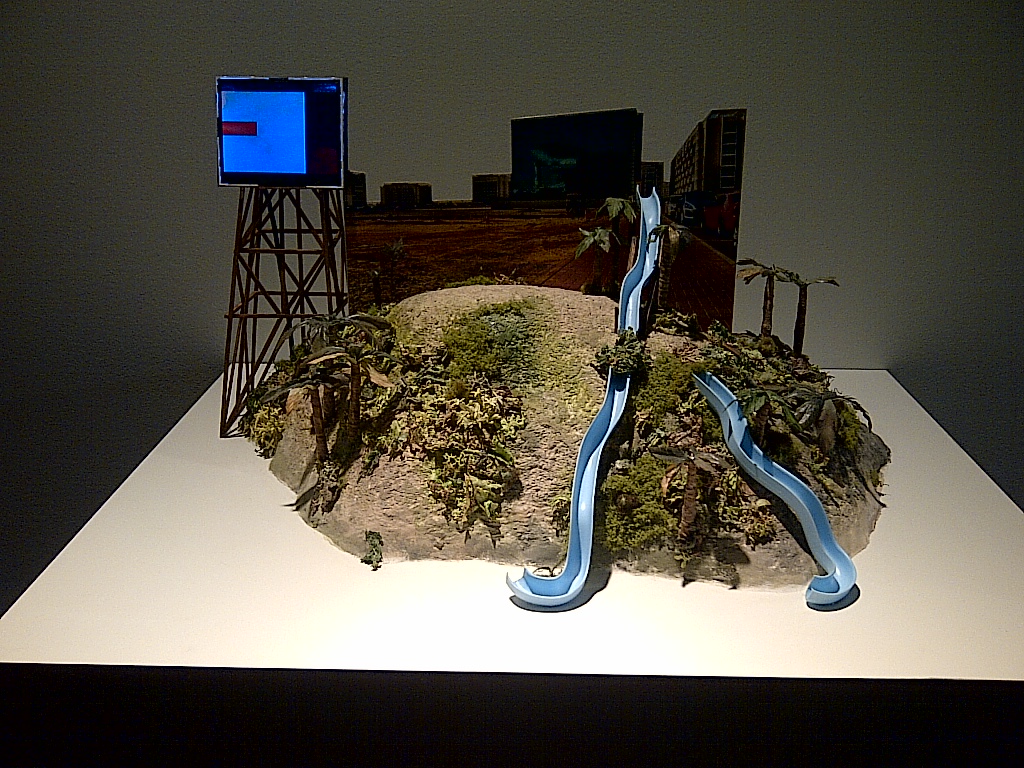
Jennifer and Kevin McCoy’s Twenty One Twelve (2012-2013) at the Moving Image Art Fair in New York this past February was a mixture of sculpture, moving images, and new technologies. Or rather, a combining of new technologies with a series of landscapes of defunct technologies, the remains of a previous life; future and past collide.
It immediately recalled the post-apocaplyptic British comedy The Bed Sitting Room (1969) a film that traces the new everyday (and weird) lives of a handful of survivors. Sitting on trash, traversing amongst the ruins, and clinging on to old routines, The Bed Sitting Room shows a similar visualized collision between the past and the present into one transformative future. Architecture and a sense of experiential place are exploited in both works.


The Bed Sitting Room (Richard Lester, 1969)…


Mike Nelson’s 500 words in Artforum (read the whole thing here):
LINEAR NARRATIVE HAS NOT always been important to me, but illustrating the sense of meaning and space beyond what is actually presented in a show is. As a child I was taught that if we want to see a figure moving in the distance as darkness falls, we should look to the side of him to see the movement more clearly. This idea resonates with the way I work: I try to draw the viewer in to focus on one thing in order to understand another. I hope that this way of working is becoming more pertinent in relation to our media-saturated lives. The constant mediation through technology that we face everyday leaves very little time or space for the unknown––no time to imagine or wonder what might be or have been. So few people have the desire or the patience any more to engage with work in this way.
Image: Coral Reef (2000)
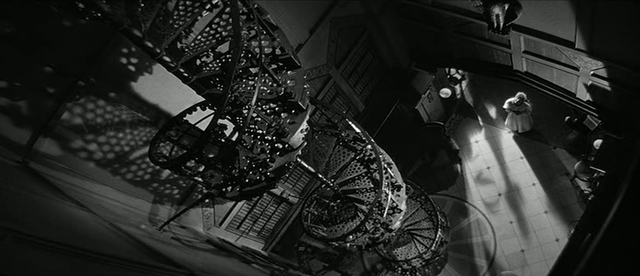
“No organism can continue for long to exist sanely under conditions of absolute reality; even larks and katydids are supposed, by some, to dream. Hill House, not sane, stood by itself against its hills, holding darkness within; it had stood so for eighty years and might stand for eighty more. Within, walls continued upright, bricks met neatly, floors were firm, and doors were sensibly shut; silence lay steadily against the wood and stone of Hill House, and whatever walked there, walked alone.”
– First paragraph of Shirley Jackson’s novel The Haunting of Hill House (1959)
-Image from Robert Wise’s film The Haunting (1963)
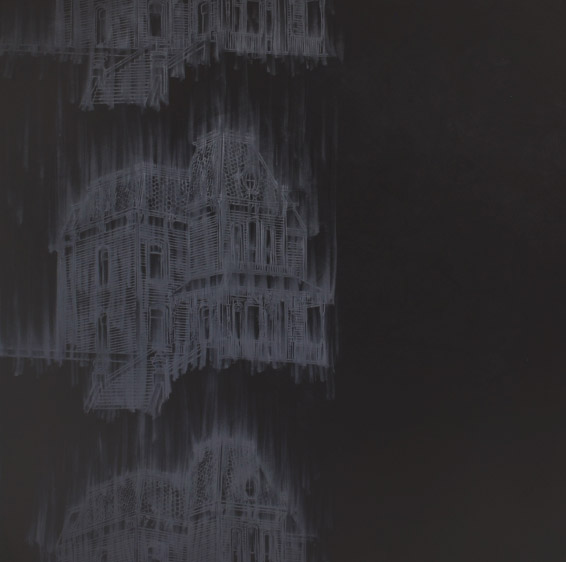
“Film plays a big role in how I go about making work. I’m reverent of film, filmmakers and film history. Our collective memory is contained and constructed by film.” – Gary Simmons to Okwui Enwezor in Paradise.
Gary Simmons – Mother Oh Mother
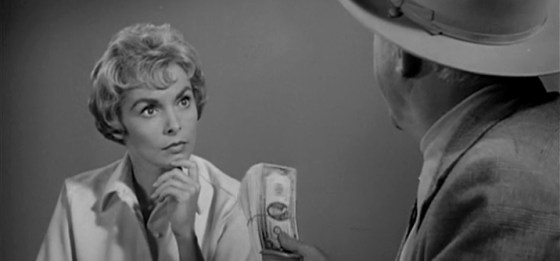
The history of horror cinema is a complicated web of socio-political narratives combined with the limitations and innovations of filmmaking itself. What Julian Hoeber’s Where’s the Money (playing now on MOCAtv) suggests is that there is a direct correlation with money (i.e. the budget) with the representation and association of the real (in low budget horror films). And that’s an interesting idea. But because Hoeber’s piece is an frenetic and cursory analysis of horror film, it doesn’t really take us where we need to go by diving deeply or succinctly enough into the very important commentary that can associate horror cinema with the real (whatever that really means).
Where’s the Money skips decades quickly, omitting many films in-between that are certainly part of the evolution of the genre; from Freaks to Scream back to Last House on the Left with a curious inclusion of Fulci’s Zombi. Here horror comes off as second-rate, like a bad video-taped porno flick, rather than embodying its position as a vital component to cinema that allows uncomfortable subject matter to be approached and eviscerated right before our very eyes. I find the idea of associating horror with low culture problematic; it’s not merely about economics but the outbursts of social issues that stem from money, and, subsequently, labor and power that makes horror such a potent genre.
What I’m saying is that horror film is infinitely more complex that what’s presented here and that the notion of economy plays out in horror more fluidly than merely in the way in which it’s created. The provocation of money and the real presented in Where’s the Money would have been better served by a narrower focus. For instance, many thinkers associate Eli Roth’s Hostel (2005) as a manifestation of 9/11 Gitmo torture scenarios back upon unwitting American tourists in Eastern Europe. However what’s really at play is the idea of economy and power. There are only two Americans in the whole film, the rest of the people being killed or doing the killing are from all over the world. That film isn’t about “torture and America” but about a globalized system of exchange and an examination of values. Exploring this faction of Hostel (which was not a low-budget film) or in recent films like Land of the Dead or We Are What We Are or even Hitchcock’s Psycho, Where’s the Money could have taken a more measurable stance about how money influences the decisions we make and how horror evaluates those choices.
 THE GIRL WHO KNEW TOO MUCH