Jennifer and Kevin McCoy’s Twenty One Twelve and The Bed Sitting Room

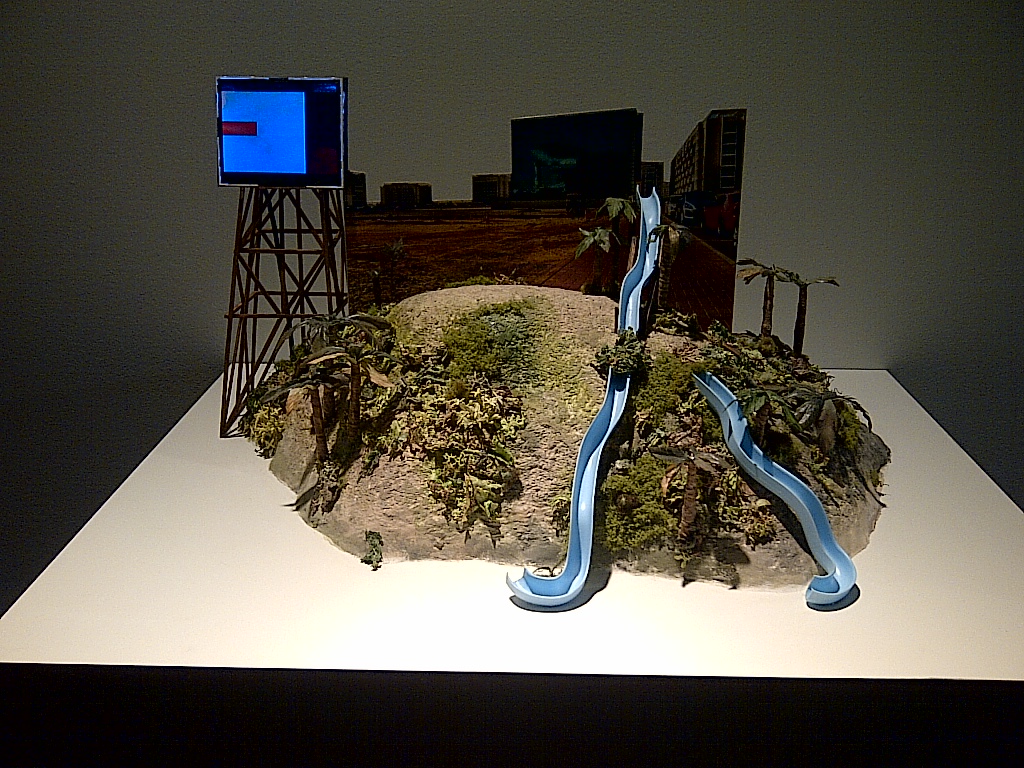
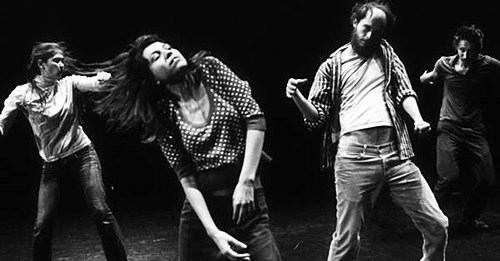
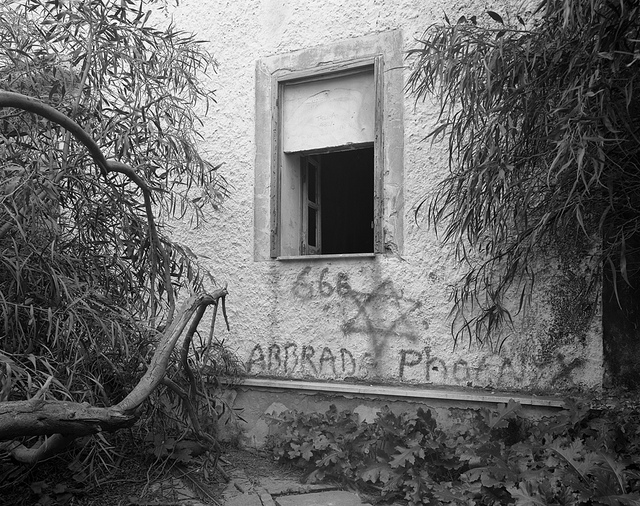
Jennifer and Kevin McCoy’s Twenty One Twelve (2012-2013) at the Moving Image Art Fair in New York this past February was a mixture of sculpture, moving images, and new technologies. Or rather, a combining of new technologies with a series of landscapes of defunct technologies, the remains of a previous life; future and past collide.

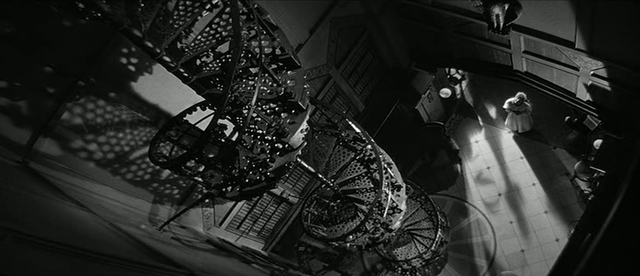
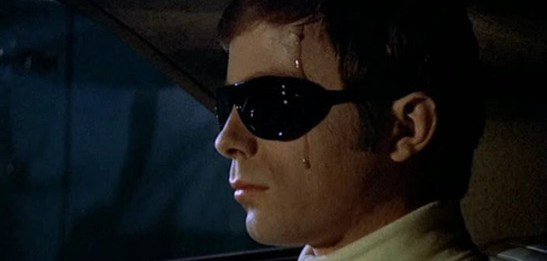
It immediately recalled the post-apocaplyptic British comedy The Bed Sitting Room (1969) a film that traces the new everyday (and weird) lives of a handful of survivors. Sitting on trash, traversing amongst the ruins, and clinging on to old routines, The Bed Sitting Room shows a similar visualized collision between the past and the present into one transformative future. Architecture and a sense of experiential place are exploited in both works. 

IMG-20130307-01401IMG-20130307-01399 IMG-20130307-01400

The Bed Sitting Room (Richard Lester, 1969)…

1330393928_3

bed-sitting-room-dome-1

vlcsnap-0001717

Mike Nelson – 500 Words in Artforum

Mike-Nelson-The-Coral-Ree-006

Mike Nelson’s 500 words in Artforum (read the whole thing here):

LINEAR NARRATIVE HAS NOT always been important to me, but illustrating the sense of meaning and space beyond what is actually presented in a show is. As a child I was taught that if we want to see a figure moving in the distance as darkness falls, we should look to the side of him to see the movement more clearly. This idea resonates with the way I work: I try to draw the viewer in to focus on one thing in order to understand another. I hope that this way of working is becoming more pertinent in relation to our media-saturated lives. The constant mediation through technology that we face everyday leaves very little time or space for the unknown––no time to imagine or wonder what might be or have been. So few people have the desire or the patience any more to engage with work in this way.

Image: Coral Reef (2000)

Hill House

staircases-haunting63-preview

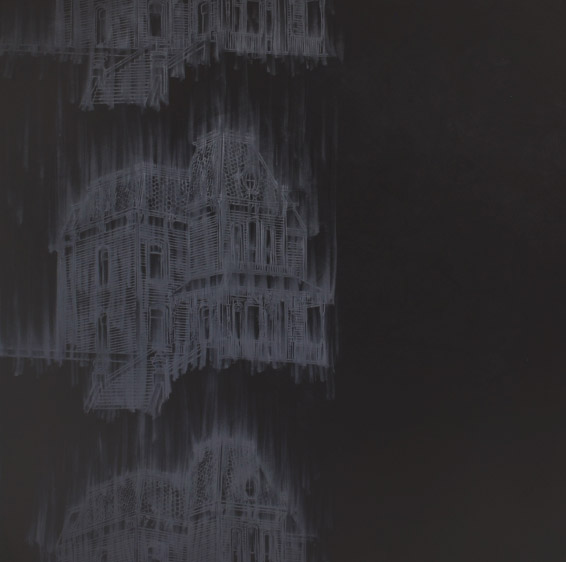
“No organism can continue for long to exist sanely under conditions of absolute reality; even larks and katydids are supposed, by some, to dream. Hill House, not sane, stood by itself against its hills, holding darkness within; it had stood so for eighty years and might stand for eighty more. Within, walls continued upright, bricks met neatly, floors were firm, and doors were sensibly shut; silence lay steadily against the wood and stone of Hill House, and whatever walked there, walked alone.”

– First paragraph of Shirley Jackson’s novel The Haunting of Hill House (1959)
-Image from Robert Wise’s film The Haunting (1963)

Where’s the Money, Julian Hoeber

The history of horror cinema is a complicated web of socio-political narratives combined with the limitations and innovations of filmmaking itself. What Julian Hoeber’s Where’s the Money (playing now on MOCAtv) suggests is that there is a direct correlation with money (i.e. the budget) with the representation and association of the real (in low budget horror films). And that’s an interesting idea. But because Hoeber’s piece is an frenetic and cursory analysis of horror film, it doesn’t really take us where we need to go by diving deeply or succinctly enough into the very important commentary that can associate horror cinema with the real (whatever that really means).

Where’s the Money skips decades quickly, omitting many films in-between that are certainly part of the evolution of the genre; from Freaks to Scream back to Last House on the Left with a curious inclusion of Fulci’s Zombi. Here horror comes off as second-rate, like a bad video-taped porno flick, rather than embodying its position as a vital component to cinema that allows uncomfortable subject matter to be approached and eviscerated right before our very eyes. I find the idea of associating horror with low culture problematic; it’s not merely about economics but the outbursts of social issues that stem from money, and, subsequently, labor and power that makes horror such a potent genre.

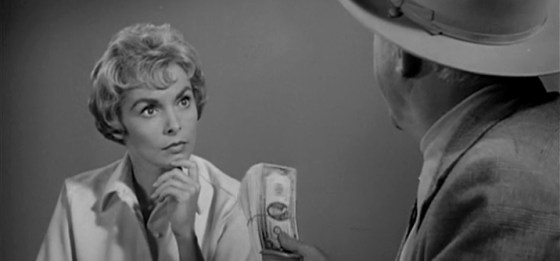
What I’m saying is that horror film is infinitely more complex that what’s presented here and that the notion of economy plays out in horror more fluidly than merely in the way in which it’s created. The provocation of money and the real presented in Where’s the Money would have been better served by a narrower focus. For instance, many thinkers associate Eli Roth’s Hostel (2005) as a manifestation of 9/11 Gitmo torture scenarios back upon unwitting American tourists in Eastern Europe. However what’s really at play is the idea of economy and power. There are only two Americans in the whole film, the rest of the people being killed or doing the killing are from all over the world. That film isn’t about “torture and America” but about a globalized system of exchange and an examination of values. Exploring this faction of Hostel (which was not a low-budget film) or in recent films like Land of the Dead or We Are What We Are or even Hitchcock’s Psycho, Where’s the Money could have taken a more measurable stance about how money influences the decisions we make and how horror evaluates those choices.

Deathdream: Vietnam Comes Home

[Essay written for the Deathdream screening at Nitehawk Cinema on February 12, 2013 that included an introduction by Adam Lowenstein, Film Professor and author of Shocking Representation: historical trauma, national cinema, and the modern horror film).

Bob Clark’s 1972 cult classic Deathdream (original title: Dead of Night) is part of a select group of films from the era that dealt with the trauma of the Vietnam War. These films positioned this trauma back onto the United States by expressing the horror of war returning back to a place in which it originated but wasn’t fought. Deathdream visualizes this return in the ghostly form of a young deceased soldier, finding his way back to his family and to establish his final resting ground on familial soil. However, unlike the visceral explosions played out in Wes Craven’s The Last House on the Left (1972) and Tobe Hooper’s The Texas Chainsaw Massacre (1974), Deathdream is a representation of hope in the faith of certain death; his family wants so much to believe he is alive, almost as much as he wants to come to terms with his death.

imagesThe family structure lays at the center of these post-Vietnam horror films, no matter how messed up in its depiction (re: the Virgin Spring-inspired parental revenge and/or the in-bred role-shifting dynamic). In Deathdream there is a powerful, near transcendent, relationship between mother and son. The mother (Christine Brooks played by Faces actress Lynn Carlin) refuses to believe that her son Andy could possibly be dead, even when military officers deliver its confirmation. So when Andy returns, she delights in this truth even though his father (Charles played by Faces and Godfather star John Marley) suspects something is wrong. And wrong it is. Andy has indeed died, as the audience sees in the opening sequence, and has somehow managed to find his way home. He’s not a zombie or a vampire as many descriptions surmise (although he does drink blood to retain “life”) but, rather, a restless ghost whose soul is adrift, conflicted about how and where he was killed, and who needs to find solace in his hometown, with the love of his mother.

dead-of-night--2Immediately after Andy’s arrival back to his home we (and everyone except his mother) get the sense that there is something terribly wrong. Despondent and angrily violent, his behavior mimics the dissociation experienced by Vietnam soldiers trying to acclimate when back on U.S. soil. However, it’s much more than that – Andy is deadly. He kills truck drivers, the family dog and family doctor (uttering the brilliant line – I died for you, the least you can do is die for me) along with his former girlfriend and nearly his sister. The family dynamic breaks down in these realizations over the truth about Andy, resulting in a despondent father fighting with the in-denial mother. It isn’t until the very end, when his mother’s love rescues his soul that we see what Andy needed all along; to come home to die.

deathdream01Made before Bob Clark’s nearly unwatchable debut Children Shouldn’t Play with Dead Things (1973) and his brilliant horror opus Black Christmas (1974), Deathdream is a pitch-perfect revelation of the horror of Vietnam in cinema. Perhaps it’s not so different from our current political climate as we can sympathize with the painful unknowing of why one is fighting and dying overseas and how families continue to cope with loss. Watching Deathdream now, it’s important to recognize the importance horror film has to mirror the unseen and discarded painful aspects of human existence. While we may be seeing a reference to Vietnam unfold on screen, we are really looking at a reflection of humanity: war, death, life, loss, and love. Equally full of pain and affection (with a bit of Bob Clark humor thrown in), Deathdream reveals the universal potency of horror cinema in its most beautifully basic form.

On the Desperate Edge of Now: Joachim Koester

Part of an in-progress writing series related to an upcoming exhibition, On the Desperate Edge of Now, that looks at historical trauma and collective cultural memory in horror film and contemporary artists. These writings will eventually be published in volume four of Incognitum Hactenus and as exhibition catalogue. See previous post on Folkert de Jong here and Heather Cantrell here.

“Koester echoes in his investigations the magic at the heart of photography that fold the past into the future and the known into the imagined, a process that arrests time and captures possibilities.” – Lisa Le Feuvre

gJoachim Koester’s film and photographic work become persistent ghost stories that meld the historical with pop-cultural and fictional constructions. Seeming to gravitate towards the macabre, Koester inclusion of Charles Mason, Bram Stoker’s Dracula, the occult, the opium trade, and speculative fiction writers such as Baudelaire and Dumas as well as H.P. Lovecraft result in a contextual montage that both familiarizes and complicated our understanding of the past.

Koester’s video Numerous Incidents of Indefinite Outcomes (2007) attacks the very concept of time in terms of mining the past and manipulating the present. This work processes textual fragments from the “weird fiction: of H.P. Lovecraft’s The Notes of Commonplace Book through a computer program that generates endless possibilities of speculative musings. This is a never-ending, never-repetitive, constantly morphing process is a theatrical word play visualized. Fusing new connections pulls the past into the present or as William S. Burrough’s observed, “when you cut into the present the future leaks out.”

Morning of the MagiciansThe video invokes the spirit of H.P. Lovecraft, an early 20th century writer who would, no doubt, be delighted to reach out from beyond the grave, manipulating his own words. Unlike his predecessor Edgar Allen Poe, who was more interested in the ghostly realm, the phenomenological writings of Lovecraft detail unseen worlds parallel to our own reality, often detailing an ancient monstrous civilization that exists on the liminal boundary between the past and the present. His infamous fictional cosmic entity Cthulu appeared in a series of stories as an ancient Elder God worthy of religious worship and capable of universal destruction while others, faceless and formless beings in The Beyond, threaten the limits of scientific and philosophical reasoning.

From The Beyond: “What do we know,” he had said, “of the world and the universe about us? Our means of receiving impressions are absurdly few, and our notions of surrounding objects are infinitely narrow. We see things only as we are constructed to see them, and can gain no idea of their absolute nature. With five feeble senses we pretend to comprehend the boundlessly complex cosmos, yet other beings with a wider, strong, or different range of senses might not only see very differently the things we see, but might see and study whole worlds of matter, energy, and life which lie at hand yet can never be detected with the senses we have…”

The-Beyond-Final-ImageKoester’s technologically regulated usage of this “weird realism” adds an additional layer on to the pile of memory, belief, cult structures, and an understanding of our existence being shared embedded in Lovecraft’s ouvre. Numerous Incidents of Indefinite Outcomes fragments and perpetually re-contexutalizes meaning while simultaneously releasing the ghost of Lovecraft (the utilized text was published posthumously) as well as the undead characters in these narratives and the generative ghost in the machine. It verbalizes to us that we cannot trust continuity, or technology, and that variance and change are inevitable. Most importantly it presents and represents an evolving past, playing out in the now and into the foreseeable future. 

Images:
Tarantism, 2007, 16 mm film installation
The Hashish Club
, 2009, 16mm film and B/W photo installation
Morning of the Magicians, 2006, 16mm film
Final scene in Lucio Fulci’s The Beyond, 1981


Night of the Living Dead: Annotated Palace Collection

I wrote about the impossibility of writing about Night of the Living Dead for the Annotated Palace Collection (project by Darren Banks):

notld

In 1968 two films were released that changed the landscape for cinema and ushered in the era of the post-modern horror film.

The first is Roman Polanski’s Rosemary’s Baby (an adaptation of Ira Levon’s novel) in which a young New York woman is betrayed by her husband and neighbors into having Satan’s child. With its colorful characters, saturated landscape, and lush style, Rosemary’s Baby is in stark contrast to the gritty black-and-white reality expressed in the wholly original second film of 1968 – George A. Romero’s groundbreaking Night of the Living Dead. Like Rosemary’s Baby, Night fundamentally questions our ability to trust other people, particularly those closest to us but its expression of the utter collapse of society (because of an unexplained phenomena that causes the dead to walk and because of the inherently violent nature of the living) and its not-so-subtle socio-political representations, makes Night of the Living Dead a devastating experience still today.

livingdead

To write something new about Night of the Living Dead is nearly as unthinkable as watching the dead rise up from the grave. This isn’t because its relevancy is relegated to the past but rather frighteningly because the issues attacked in the film are still very much apart of America’s cultural fabric. The antagonistic familial relationship as expressed between brother and sister (Barbara and Johnny: first in dealing with their dead father’s grave and then in dealing with their separation in life/death) and the nuclear family (in Night the young girl kills and eats her parents) are still familiar. Of course, Night’s famously known for its shocking representation of racism through main character Ben whose blackness is unaddressed throughout the film until the end where he is shot, killed, and burned by the redneck authorities. They may have mistaken him for a zombie but the visceral reaction to the news-footage style sequence at the film’s end – where Ben’s dead body is brutally carried by meat hooks – is a very painful visualization of America’s racism in the 1960s. Whereas then it was a representation of that turbulent time, now it’s a challenge for our generation to process these past traumas.

night_of_living_dead_05

Pop-culturally, Night of the Living Dead marks the birth of the modern zombie. Only a slew of “zombie” (Haitian Voodoo zombies) films existed before and although interesting correlations can be drawn between the pre-and-post Romero zombie cinema (mainly in their cultural reflections), it’s undeniable that Romero constructed the near unbreakable collective notion of the zombie narrative. Now, it’s imperative to re-think the zombie in order to establish contemporary allegories however, at the same time, it’s crucial to revisit Night of the Living Dead (and the rest in Romero’s “Dead” series) as a reminder of not only what innovative filmmaking can produce but also as a reminder of cinema’s power to painfully confront life as we know it.

The Black Cat: Revenge. Murder. Incest. Satanism.

An essay I wrote on Edgar Ulmer’s 1934 classic The Black Cat in relation to a dual screening I programmed at Nitehawk Cinema (in conjunction with the On the Desperate Edge of Now exhibition I’m curating)…


The-Black-CatSupernatural, perhaps. Baloney, perhaps not. There are many things under the sun.

The displaced American in Europe; Henry James made a literary career out of it, so did Hemingway, and filmmaker Edgar G. Ulmer made one of the most brilliant conflations of the new-and-old worlds in his explosive 1934 film The Black Cat. Himself an émigré from the former Austro-Hungarian Empire working in Hollywood, Ulmer was all too familiar with cultural outsider-ness and he uses it to great effect when he features the misfortune that befalls two naïve Americans traveling through central Europe on their honeymoon.

This Black Cat is loosely based on Edgar Allan Poe’s “immortal” classic but, aside from the fearful presence of a cat that is black, it bears little resemblance to the short story. Instead, there is a complexly interwoven story with much at play: revenge, love, treason, psychological disorders, incest, Satanism, and architecture. But at the core are the eruptions caused by historical trauma caused by World War I with the film asking: what does war make men do? What is surviving or even living? Do free men make their own prisons? Who are the “good” guys? Ulmer’s film places together the past and the present, America and Europe cultures, and the traumatized with the innocent.

blackcat6The story takes place in an imposing Bauhaus-inspired architectural structure that has been built upon the graves of a battlefield by Hjalmar Poelzig (played by Boris Karloff). The two Americans, Peter and Joan Allen, and a Hungarian psychiatrist named Dr. Vitus Werdegast (played by Bela Lugosi) wind up at the modernist house after a deadly accident in their shared car. But whereas the couple is taken off-course and enters a world unfamiliar, Werdegast is exactly where he intended to be – at the former site of war that he fought alongside Poelzig. Home. He is there to kill Poelzig as retribution for abandoning their battalion and for stealing his wife while he, loyal until the end, was a prisoner of war for fifteen years.

Of course, the war being echoed here is World War I (the Great War) that, with no doubt, had a significant impact on European culture and on Ulmer himself. “The force of their struggle symbolizes the shattered and corrupted humanity left in the wake of World War I. Their personal desire for death, then, is a natural extension of wartime patriotism, and duty: a desire for destruction adopted and internalized.”1 This intensely rich back-story embodies the The Black Cat and forms the underlining profound sense of loss echoed throughout the film; everybody has lost something and has been the walking dead for all these years, coping in different ways with the effects of the war. As a result, both men are mad and self-destructive. As Poelzig says shiningly, “Even the phone is dead here…even the phone is dead.”

the+black+cat+1In the battle of Karloff and Lugosi (it was the first time the two huge stars of the time had been onscreen together), it’s Karloff’s Poelzig who becomes the void in which trauma has been funneled into. Deeply guilty about his treason and about surviving, Poelzig is never-the-less a calculating and evil monster. He abandoned his team, stole his friend’s wife, killed her (and other women) while she was still young to retain her beauty, married his step-daughter, and is a Satanic high priest capable of human sacrifice. Living in his Gothic mansion, albeit a modernist masterpiece, he has isolated the outside world and remained living in his own contamination. So it is with little surprise at the vehemence in which Werdegast attacks his nemesis; he destroyed his life, the world destroyed them both.

the-black-cat-boris-and-belaConsidered the original “King of the B’s”, the mysterious Edgar G. Ulmer notoriously made his films on the cheap side (mainly do to the fact that he was blacklisted in Hollywood after marrying the already married woman of a Universal Studio chief). Along with The Black Cat, his films Damage Lives (1933), Bluebeard (1944), and Detour (1945) are an incredible combination of horror, noir, and German Expressionism, near perfect in their expression of loneliness, pain, and failure. In fact Detour is rightly considered one of the best films in cinematic history. What makes Ulmer films so special is how seemingly anachronistic they are, utterly daring in narrative, cinematography, and acting they are. It’s difficult to come to grips that these films were made in the 1930s and 40s! The Black Cat is particularly bold in showing a satanic mass (something more 
culturally associated with the Anton Lavey 1960s) and Poelzig being tied up then flayed alive (who can come to terms with a shirtless Boris Karloff being skinned?!).

Brutal in its subject matter while inventive in its depiction, The Black Cat is, and should be rightly considered to be, one of the classic forefathers of horror cinema. The inclusion of two young Americans symbolizes the culture clash of the time and, as Paul A. Cantor writes in his essay The Fall of the House of Ulmer, “The Black Cat suggests that, unfortunately, Americans would not recognize a European horror story even if they wandered right into the middle of it.” But would we now? Through its self-reflexive (and explicitly meta-texual) combination of histories (personal and cultural) played out on the big screen, it is possible that as the horrors of past wars continuously haunt us through cinema, we are being forced to comes to terms and deal with these traumas still today.