From literature to the theater to the screen. Narrative and meaning shifts with medium changes as films like Frankenstein and Dracula often differ greatly from their book predecessor.
Author Archives: caryncoleman
Susan Hiller: “Channels” at Matt’s Gallery
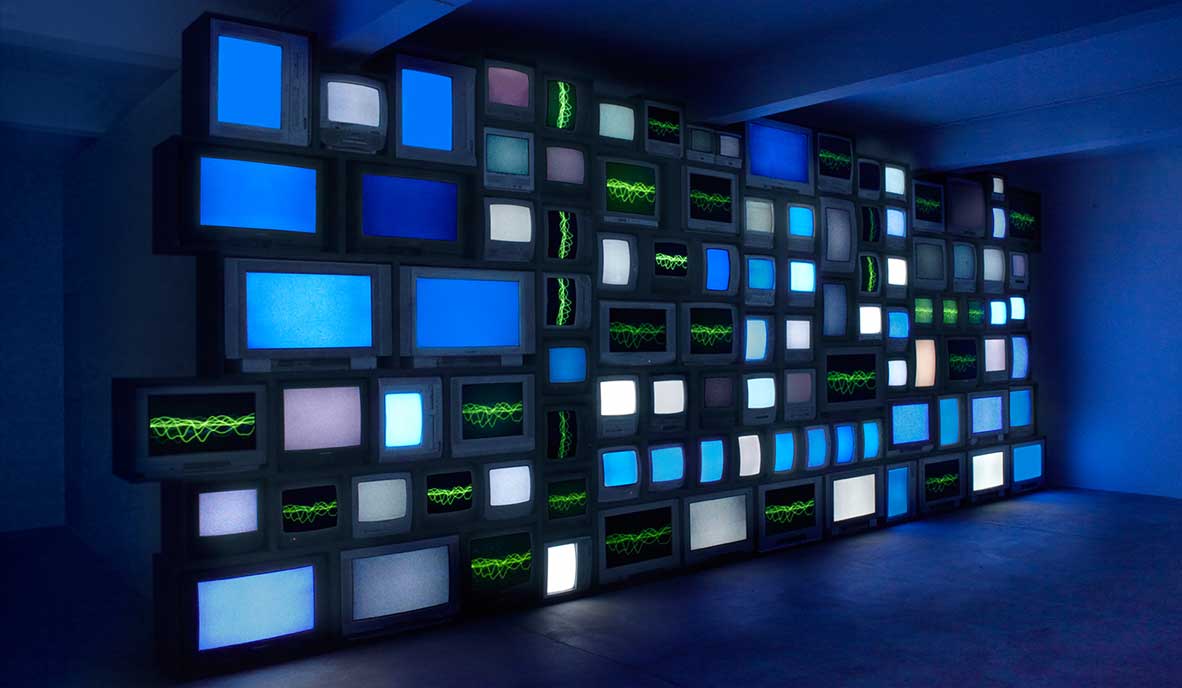
Susan Hiller’s Channels at Matt’s Gallery is an audio-visual conglomeration of near death experience (NDE) narrations told through a full-scale installation of television monitors. Whether these monitors simply house these personal stories or act as a portal through which they emerge isn’t clear. It doesn’t need to be. Bathed in the glowing light of these numerous screens, numerous voices come forth with one eventually becoming the clearest. Hours of recantations are housed here, in these screens, in this room. It’s the near-ghost in the machine.
Channels is a mixture of static, noise, and voices. Sometimes you wait a while for the static to clear and the stories to begin as if we’re all there using the televisions are our conductor to those who have experienced death. Told are tales of sensations of leaving the body, the past flashing before them, feelings of humor and regret, and, naturally, the tunnel of shining light. We also learn that there are qualifiers of what makes an NDE. They seem elastic. Significantly, these people are not dead. They are not the ghosts using white noise as a communication tool with the living. These voices are alive and they have conquered death.
Not dissimilar to Mike Nelson’s installation More things (To the memory of Honore de Balzac) next door, Channels deals with the unknown. Not strictly in the sense of questioning the ultimate unknowable (what happens when we die?) but in the very fundamental aspects of being: how do we hear? how do we recognize? how do we experience things? And like the film Poltergeist, these provocations occur through the mediation we are all familiar with – television (or if we want to think more broadly, media). Technology controls are interactions with each other and, as new technologies emerge, our relationships with one another evolve according to these new networks. Channels explores such a network of people with shared experiences, traumatic or peaceful, and uses the object of the television to shared these stories with us.
Hiller has made reference to dreams in previous works and the question of dreams and the way in which our mind constructs dreams while unconscious and how we process them while awake is significant here. In her book The Dream and the World Hiller writes, “If you start to think about dreaming, you may well find yourself in a vortex of philosophical paradoxes, enigmas and conundrums that liquefy any fixed notion of ‘self’ and ‘reality’.” And isn’t that what Channels produces? Is it possible that Near Death Experiences are simply an individual mind coping with the inevitability of death; a unique experience for each person with enough generalities of the human mind? Or is it more frightening to suggest that there’s something external producing these similar sensations?
The voices heard, whether alive or dead or even the real people who had a NDE, produce a series of hauntings within the space of the gallery. Here, these moments of the unknown are continuously re-lived and re-counted, processed and questions by those who hear them. Us.
Image by Peter White courtesy the artist, Timothy Taylor Gallery and Matt’s Gallery, London.

Mike Nelson: “More things (To the Memory of Honore de Balzac)”
The following is what I hope will be the first of many writings about the work of Mike Nelson. This particular essay stems from his recent exhibition More things (To the Memory of Honore de Balzac) at Matt’s Gallery in London and our conversation about architecture, horror films, and narrative implications.
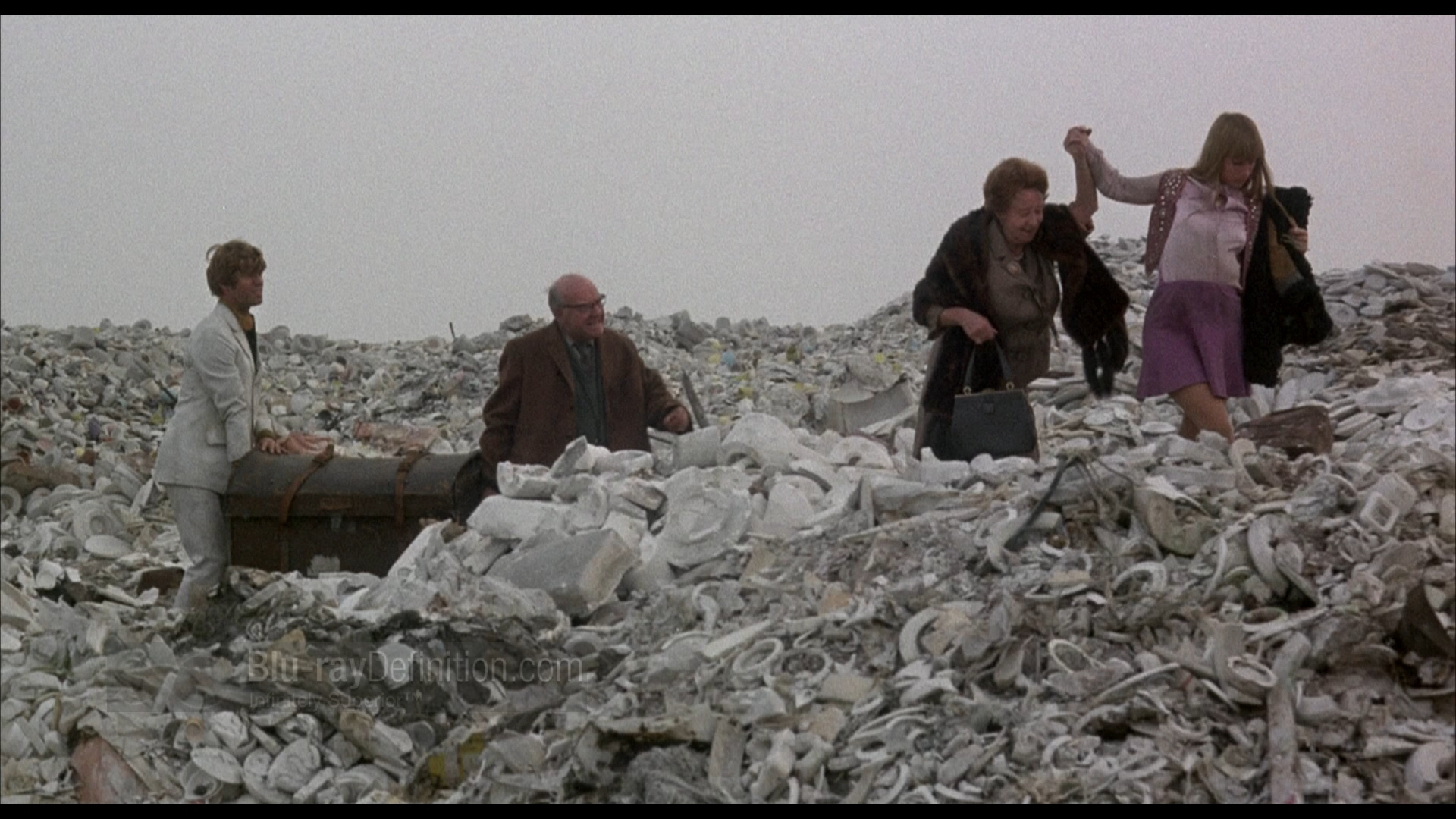
In Richard Lester’s 1969 post-apocalyptic comedy film The Bed Sitting Room, a select few find themselves living in the strange aftermath of nuclear war in London. Their natural attachment to objects (the city is littered with shoes, suitcases, millions of discarded things) and the old order of life shifts again when, suddenly, a new post-war effect takes place…they begin to turn into things themselves. A bed sitting room, an armoire, and even a bird (all with the power of human consciousness and speech) are the mutated forms of life. Although designed for the audience to laugh at the absurdity of this new existence, the film reveals there is a real horror in acknowledging the possibilities of what might happen when the world changes.
Mike Nelson’s latest installation at Matt’s Gallery, More things (To the Memory of Honore de Balzac), produces a similar provocation. Inversing the architectural structures he has become known for, Nelson has laid out a series of objects that are a series of suggestions or, as he put it, a “semblance of atmospheres.” The absence of an established “place” in which to house these things, aside from the gallery room itself, creates a sequence of open-ended narratives, connections to be made as one wanders through the room, stepping over objects, encountering mysterious forms like glancing giant skulls, trash cans grounded in cement, and long-form boards that are too low to be benches but high enough to become intrusive.

What’s most compelling about Mike Nelson’s work is that it gives permission for this kind of immediate interaction. The passivity associated with art or film viewership cannot occur in his installations and, unless you only stand in the doorway at Matt’s Gallery, certainly can’t happen here. There is an active engagement of looking in More things (To the memory of Honore de Balzac) by walking over, through, and around these inexplicable objects that navigate and determine our bodily movements in this framed space. Whereas Nelson’s architectural environments provide an obvious context of our experience, the items usually contained in those places is now dispersed and fragments our associations with them. We become the last people in London who traverse the new landscape.
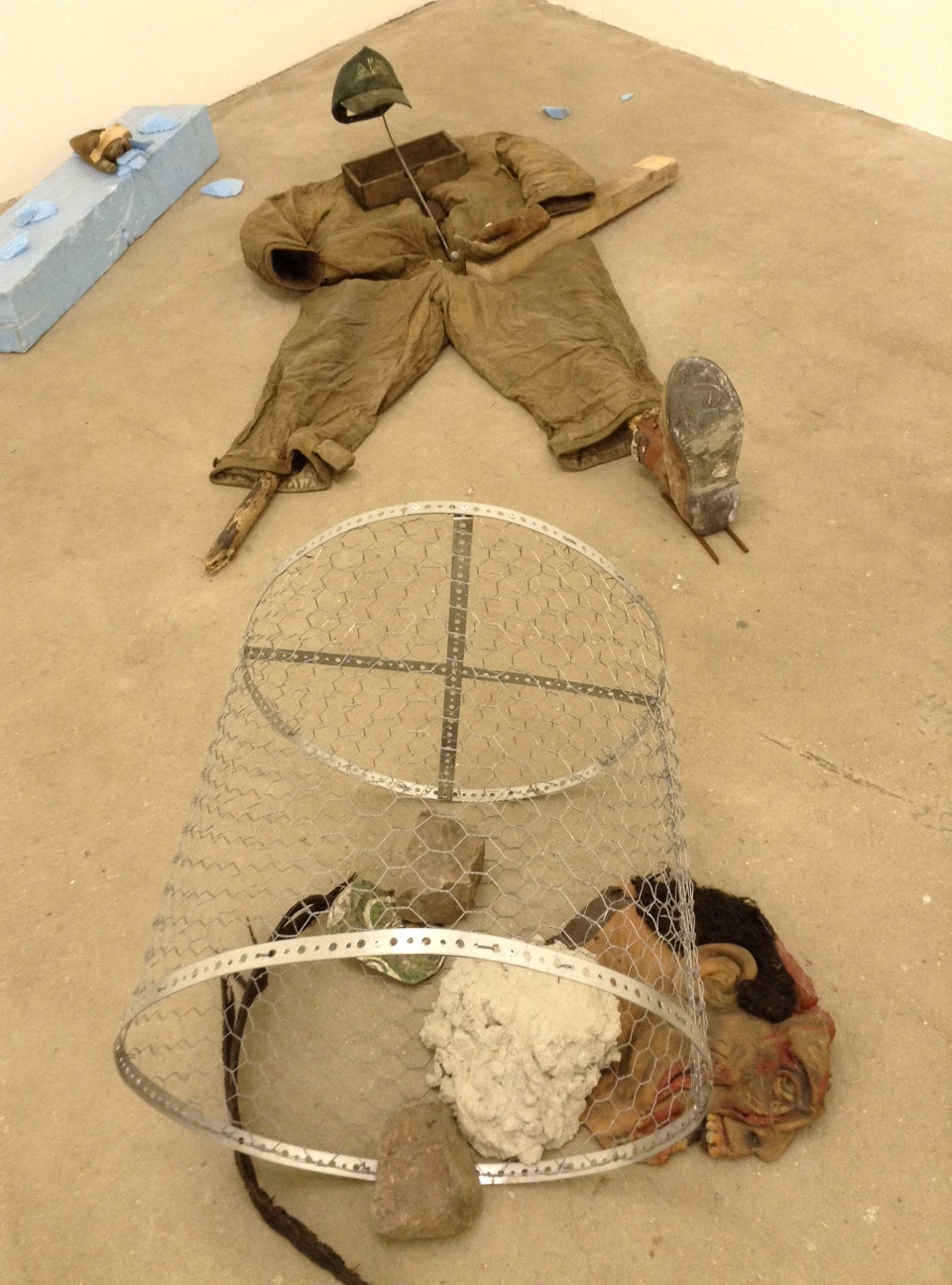 This goes back to Nelson’s idea of a “semblance of atmospheres”, an uncontained atmosphere that suggests a narrative rather than providing a linear and literal reading. Much like in The Bed Sitting Room, there is a confusion of forms and their readings, a conflation of organic and inorganic that conveys a strange new world or, at the very least, the remnants of an old strange world. The absence of figures in the installation is outlined in pieces that imply human form; a deflated work suit complete with a hat hanging from a metal backbone and a shoe with spikes underneath (the other “foot” is a stick) lays in the corner while a similarly deflated sleeping bag holds court in the middle of the room, dirty and barren. Animal skulls dangle from re-structured chairs suggesting that, such as in the film, living creatures are now components of material form. Scalped masks lay frozen on the floor. More ominous are the wooden sticks (charred and jagged) formed into something between a grave marker and crucifix or the scarecrow-like figures with animal skin draped as a body and a tambourine.
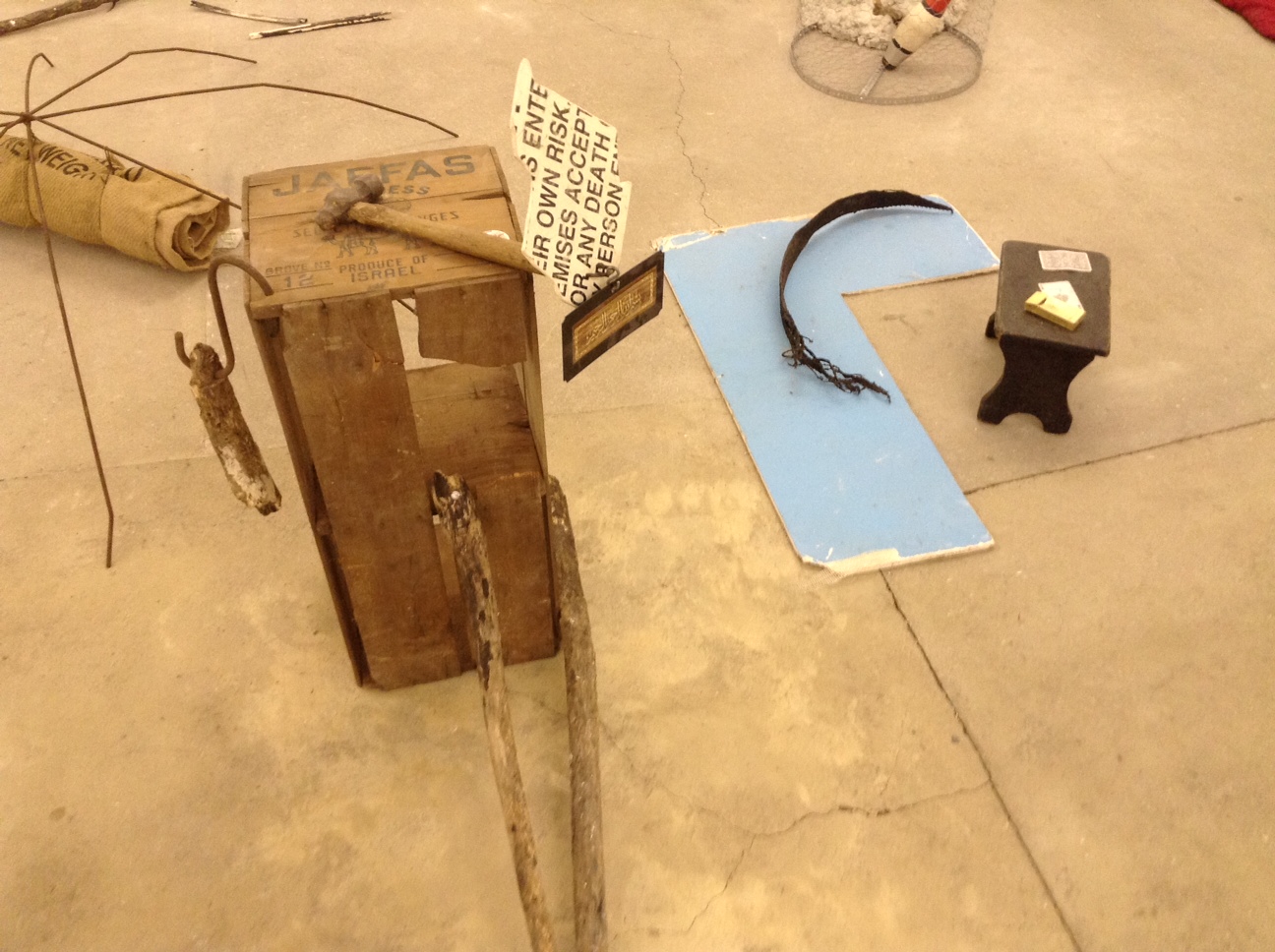
Though lacking an overriding or oppressive narrative, Nelson does subtly drop hints that could mark the cause of this barren landscape. As in his title reference to Balzac, there is no escaping politics and society here. Specifically, there is one sculptural object housed in the back corner that consists of a broken crate from Jaffa, Israel alongside a near-destroyed caution sign (enter at out risk) and hanging plaque with Arabic writing. There is the suggestion of a former architectural structure that seems to have been blown apart. A reference to the volatile and ongoing conflict between Israel and Palestine, the dispute of land territory and agricultural ownership, this near obliterated object could contain the meaning to the end we are witnessing. That there are giant skulls framing the room doesn’t dissuade this argument. This is what could remain.
Both The Bed Sitting Room and More things (To the memory of Honore de Balzac) connote a very powerful presence through absence and explore what exists at the liminal boundary between the two. By acknowledging the unknown and a non-reality, they depict a possible reality of a new world born from and within the destruction of the old. And isn’t this what science-fiction, horror, and art do best? Show us possibilities of an existence that we cannot begin to fathom or visualize or formulate by ourselves? Providing a visual reference to the unthinkable, the unrepresentable, my reading of Mike Nelson’s installation is just that: disparate forms coming together to imagine what remains and what is possible in an unimaginable plane of existence. More things (To the memory of Honore de Balzac) doesn’t require an architectural guide to convey the abject terror of disassociation from the familiar; the sculpture entities are alone a frightening implication that we humans are not a part of this new other world.
Images by Caryn Coleman, courtesy of Mike Nelson and Matt’s Gallery.

Burnt Offerings: the vampiric house
Burnt Offerings is the second film in Nitehawk’s series THE WORKS – KAREN BLACK. It is the only horror film featuring Black in the program that also includes Easy Rider, Five Easy Pieces, Airport 1975, Family Plot, and The Day of the Locust. The following text was originally written for Fangoria…
Burnt Offerings is pretty much the perfect horror movie. Psychological, mysterious, and haunting, it breaks away from many of the more gruesome exploitation films of the early 1970s while being very much distant from the American slashers that were to follow. Featuring an all-star cast of Karen Black, Oliver Reed, Burgess Meredith, and Bette Davis, Burnt Offerings offers a truly original take on the haunted house. Rather than the home being an area that the dead occupy, as we’re accustomed to seeing in haunted house films, the home here is very much alive…and it needs to be fed.
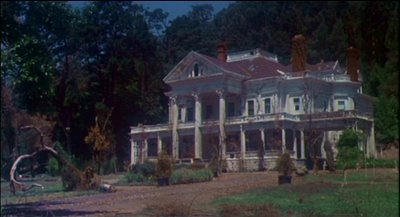
Fairly faithful to Robert Marasco’s brilliantly vivid 1973 novel of the same name, Dan Curtis’ (also director of Trilogy of Terror) version of Burnt Offerings retains that fuzzy, hazy, confused and uncomfortable sensation that pulsates throughout the narrative of the book. Epitomizing the phrase “if it’s too good to be true, then it probably is,” the film centers around the Rolf family (Ben, Marian, and Davey) who have rented a gothic country house for the summer as a means to escape their hectic life in the city. The strange owners of the house, the Allardyce siblings Arnold (Burgess Meredith in a wonderful flamboyant performance as the wheelchair bound “brother”) and Roz (an in-control and raspy voiced “sister” Eileen Heckart), should have been the young family’s first warning. The ridiculously low rental price for the summer announcement following by the catch that the Rolfs would have to take care of the Allardyce “mother” during their stay should have been their second. But the lure of the house is too strong for Marian and so she enters her family into ruin.
Immediately Marian becomes obsessed with the house. She cleans, straightens, swoons over its interior as the life begins to drain out of her. She spends increasingly more time in the never-present Mrs. Allardyce’s room, becoming one with it. Her hair becomes gray, clothing becomes Victorian. And she’s not the only one who changes. Aunt Elizabeth, a spry swearing-smoking-cursing 74 year old (played by the powerhouse Bette Davis) literally begins to crumble before our very eyes while young blood Davey becomes the main target and Ben (the manly Oliver Reed) descends into violent madness. Ben’s hallucinations include one of the more unforgetable images in horror film: the thin, grinning chauffeur. He is the source of Ben’s nightmares (presumably stemming from the funeral of his parents at a young age) and, subsequently, the source of nightmares for numerous viewers since Burnt Offerings’ release.
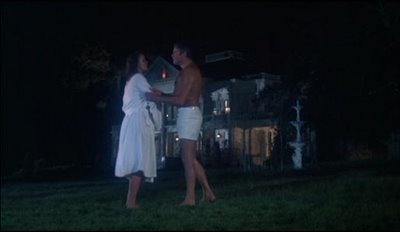
Architecture, domesticity, and women are the narrative backbone of haunted house stories. From The Castle of Otranto on up to Psycho, the role of the woman and her downfall are often told through the relationship to the home. So, while Reed’s “Ben” is the character with whom the audience identifies with on this horrifying journey (he trys desperately to save his family even when in a near catatonic state), it’s Karen Black’s “Marian” is the one whom the story centers around. Marian – her body, soul, and mind – become absorbed into the Allardyce house and, through the deaths of her family, experiences a re-birth which places her as the new motherly soul, the beating heart if you will, of the home. One could very much view Burnt Offerings as commentary on the second wave of feminism, much like The Stepford Wives, because it firmly and forcefully re-places the woman back into her proper place as “mother” and caretaker.

In a role that could easily be over-the-top, Black plays Marian with a quiet subtlety that has to be one of the best performances in horror film. Black establishes her obsession with the house so steadily and convincingly that when she returns back into the house, we don’t yell at her to not go up the stairs as we do in other horror films. Instead, we sympathize with her compulsion recognizing, as she has throughout the film, that what is about to happen to her is inevitable. Because we know, through Black’s depiction Marian, that the Rolf family structure has to be obliterated to preserve the Allardyce family. This can only happen through the rejuvenation of the home and this home is vampiric, sucking the blood from its victims in order to become new again, everlasting, to remain part of a mysterious other-worldly cycle.
Our mother…is back.
Orson Welles on…Horror Films
Mike Nelson Sneak Peek
Just a sneak peek at what’s to come…
 From Mike Nelson’s More things (To the memory of Honoré de Balzac) at Matt’s Gallery.
Simon Starling “Phantom Ride”
Spending time with ghosts. Simon Starling using the cinematic lens to evoke the artwork ghosts of Duveen Galleries past for his Commission 2013, Phantom Ride. Past and present converge in this haunting installation at Tate Britain where previous commissions by Pablo Picasso, Chris Burden, Douglas Gordon, Fiona Banner, Martin Creed (amongst others) come back from the “dead” to live again in the 300 foot long cavernous space. This architectural space (designed by Romanie-Walker and Gilbert Jenkins) was the first public gallery designed for sculpture in England when they opened in 1937 and has become a portal from which history emerges into our contemporary lives.
James Aldridge – Presence
Images from James Aldridge’s recent solo exhibition, Presence, at David Risley Gallery in Copenhagen…
In Aldridge’s work a tension between the real and fantastic is revealed and establishes a compelling psychological space. The conventions of landscape representation are abandoned in these paintings — horizons disappear and gravity and orientation fail to obey the usual rules. Yet connections between these birds, plants and other animals and the landscape remain, conjuring a strangely atmospheric result. Tension lies in the interplay between decorative and beautiful elements and the implied violence of dripping or vomited blood and nightmarish mutated mandalas.
James Aldridge is included in an exhibition I’m curating at Mark Moore Gallery this June called Empty Distances that explores blackness and the void in contemporary art as influenced by horror.
Mike Nelson on The Coral Reef (video)
In 2010 I visited The Coral Reef. It is a non-place, a construction, a fictional other-space housed within the reality of an art museum. Non-linear, abandoned, and claustrophobic. Dirty. No other artwork has ever made my heart pound and my palms sweat.
Here is artist Mike Nelson talking about the re-installation of The Coral Reef at Tate Britain (where I saw it).

Ways of seeing: the fearful role of art in Rod Serling’s NIGHT GALLERY
Ways of seeing: the fearful role of art in Rod Serling’s NIGHT GALLERY
Rod Serling television post-Twilight Zone adventure, Night Gallery, is revolutionary in its usage of art (paintings, sculpture, and art-informed language) as the portal from which its frightful narrative emerges. With each introduction our curator (Serling) shows the audience an artwork that contains, reveals, and is born from the horror story we are about to witness. Here, artwork functions as a way to tell the kinds of stories deemed “unbelievable” or “unreal” – what Night Gallery proposes is that the real is elastic, subjective to our supernatural experiences, and housed within artworks.
Culling often from H.P. Lovecraft (in fact, many episodes are direct visualizations of his stories), Night Gallery shows a speculative reality that places imagined horrors into the realm of the real. Particularly in the beginning of the series, before Serling’s control over production waned, the episodes were present-day narratives in which past actions have otherworldly consequences. In this way Night Gallery is a clear extension of The Twilight Zone, its younger sister functioning as an unfolding morality play to reflect that what we do, the choices we make, matter and affect. It is a fantastical mode of expression for an popular-culture entertainment vehicle such as a television series to ground itself within visual art and to have artwork speak to its viewer. It is a statement that art has the potential for substantive power. Therefore, Night Gallery challenges a notion of how we see, not just artworks or television, but the world around us.
Night Gallery launched as a television movie on November 8, 1969 telling three tales of horror: The Cemetery, Eyes, and The Escape Route. Below I will discuss how each episode embodies the role of artworks and viewership in its depiction of social, political, and personal terrors.
 THE GIRL WHO KNEW TOO MUCH