On the Desperate Edge of Now

Auschwitz. Hiroshima. Vietnam. These are names associated with specific places and occurrences [of historical trauma] but they are also wounds in the fabric of culture and history that bleed through conventional confines of time and space. – Adam Lowenstein ‘Shocking Representation’

One of my research strands on the influence of horror cinema and contemporary artists is looking at how artists manifest historical trauma within their work. By using the structure of the horror film as a guide and in considering Deleuze and Bergson’s notion of the now as an “ever shifting amalgam of past, present, and future”, I’m exploring the idea of a haunted present and possible recuperation seen in the representation of trauma in contemporary artworks.

This particular project (which I plan on realizing in exhibition form) is being called On the Desperate Edge of Now, titled after the first episode of British filmmaker Adam Curtis’ documentary series The Living Dead. In a visual mash up of archival footage, interviews, and appropriated images Curtis describes the relationship between history and memory in the context of World War II as both an individual and political construct that is never fully resolved – a ghost always haunting the present or an omniscient zombie walking the earth. This collision of the past and the present that Curtis outlines makes for an explosively charged ever-present “now” particularly as it manifests itself into representational forms such as film and visual art.
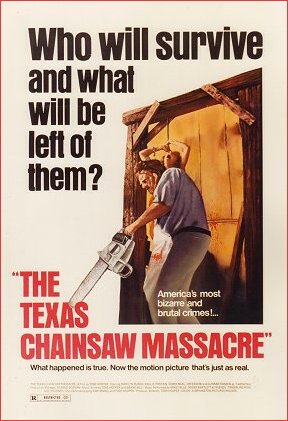
Horror films are subversive and often entertaining social commentary reflecting the cultural and political issues relevant to the time period in which they are produced. Wes Craven’s Last House on the Left (1972), Tobe Hooper’s The Texas Chainsaw Massacre (1974), and Bob Clark’s Deathdream (1974) are all
reactions to the traumatic experiences, personally and culturally, of the Vietnam War. Many horror academics also view newer films like Eli Roth’s Hostel (2005) as a reflection of America’s torturing of political prisoners at Guantanamo Bay. On the Desperate Edge of Now looks at how artists tackle similar histories through a knowing employment of strategies and signifiers found in horror cinema: humor, the family, death in life, societal repression, spatiality, allegory, and the corporeal.

Like their filmmaking counterparts, the artists I will be writing about attempt to confront history more than compensate for it. They are: Folkert de Jong, Heather Cantrell, Sue de Beer, and Gert & Uwe Tobias.
Vincentennial celebration: Vincent Price’s art insights (3)

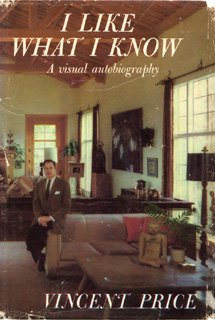
Written over fifty years ago, the latest selected quotes from Vincent Price’s I Like What I Know still profoundly resonate with today:

The other misunderstanding [about art] is that it is beyond their means. Yet the people of the United States live beyond their means, gladly and disastrously. They have let themselves be sold the biggest bill of goods in history by a Frankenstein – industrial advertising – of their own making. We all are perfectly content to make down payments on any luxury we’re told we can’t live without, but we can’t quite bring ourselves to chance investing in ourselves through education, art, or any of those splendors we lyrically call “the best things in life”…

Many people are blinded by fear of seeing something different, or of seeing anything differently, or by the inability to differentiate between what they know how to see and what they could see if they knew how.

Read previous quotes/posts herehere, and here.

Jamie Shovlin – Pieces

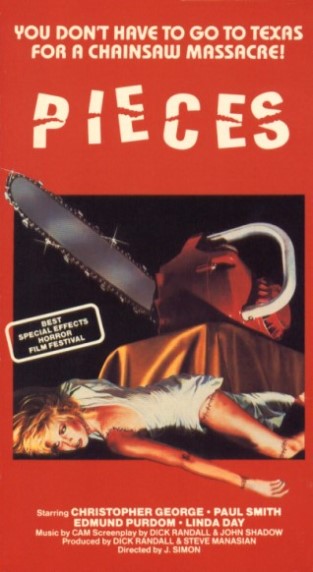
Earlier I mentioned Jamie Shovlin’s Hiker Meat project. In the same slasher film vein, here is an image of Shovlin’s Index (Pieces A) that explicitly references that bloodiest movie about body parts, Pieces (Juan Piquer Simon, 1982). The image used is taken from the trailer.

Index (Pieces A), 2011
Gouache and Image Transfer on linen mounted on board
11×16″ / 28x40cm
Courtesy of Horton Gallery

In addition to Index (Pieces A) I’ve also included the classic and clever poster for the film.


A great synopsis on
Pieces can be found here.

‘Hiker Meat’ (Jamie Shovlin) at Milton Keynes Gallery

UK artist Jamie Shovlin ongoing installation on Jesus Rinzoli’s 1981 Hiker Meat is the best slasher film never made. Featuring scripts, posters, drawings, and thousands of culled horror clips, Hiker Meat is a celebration of a memory that didn’t happen except for in our generation’s joint enthusiasm for campy killer classics.

Hiker Meat has been shown in various incarnations recently in London at IBID Projects, New York at Horton Gallery, and will be at MACRO this fall. However this Thursday Milton Keynes Gallery will be showing the film’s ‘rough cut’, along with a live performance by Lustfaust, as part of their Scratch Nights series.

Sue de Beer – 500 words on ‘The Ghosts’

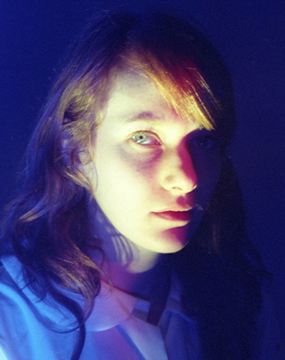
One of Artforum’s February ‘500 Words’ was artist Sue de Beer talking about The Ghosts, her film and installation for the Art Production Fund. De Beer has continuously folded horror and gothic influences into her photography and films through a cinematically macbare representation of the past, the historical, memory, and youth culture.

ORIGINALLY I WANTED TO MAKE A GIALLO––a very classic version, with ghosts in it. During the course of the narrative development I began to undergo a series of hypnosis, and I also started going to a sensory deprivation tank in Berlin. So I began to wonder about intersections between the physiological and the psychological, or about ways to take your conscious mind to a place that is unconscious but still visible––a place that produces images. It was then that I began to conceive of a character that was very much in a giallo––an occult hypnotist. After I completed the basic outline for the script, I asked Alissa Bennett to write a text for the hypnotist, where the hypnotist talks about ghosts and the way ghosts inhabit a room––leaving traces of its former occupancy, clues for present and future residents. I also asked her to write a text for a character who repeatedly visits the hypnotist, to experience a more vivid sort of “recollection.” Alissa named this “the material recollection.”

Visit: Recent exhibition at Marianne Boesky gallery Depiction of a Star Obscured by Another Figure

Vincentennial celebration: Vincent Price’s art insights (2)

Vincent Price on art from his book I Like What I Know:

It is so easy today, with every medium of communication serving us feasts for the eyes, to see the world as the best of all possible worlds; to see mankind in its true light as the creator of so much beauty, to surround ourselves with the knowledge of art, man’s highest expression of gratitude for the gift of life.

Art is, or can be, an everyday experience, and if you make it such, every day will have a beginning and an end that means continuance, furtherance, and futurity. (p. 175)

Read previous quotes/posts here and here.

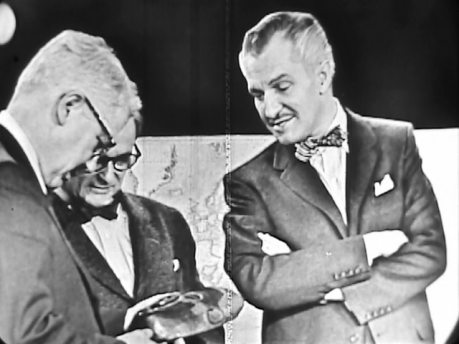
Image from the television show ‘What in the World’ where Vincent Price was on a panel to determine the where/what/when of objects. Watch the episode here.

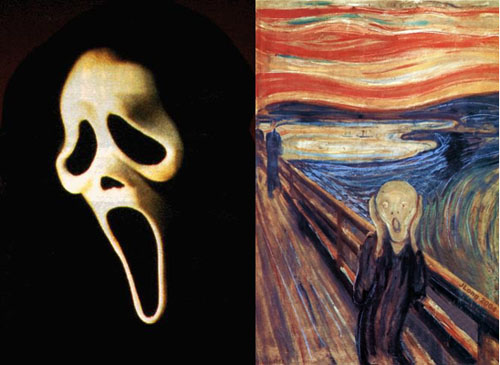
Scream versus Scream

In 1996 a little film named Scream became the ultimate post-modern and self-reflexive horror film. It managed to solidify the “rules” of the slasher genre (and before that giallo) even though these rules were never die-hard and it remains as a really clever and fun movie. Fifteen years laterScream 4opens today and to mark this occasion, having not seen the film yet I don’t know whether this is good or bad, here is a reminder of painterly inspiration in horror cinema:

Vincentennial celebration: Vincent Price’s art insights

As many people know May 2011 marks the 100th birthday of art/food/horror/acting legend Vincent Price. Places all over the world are celebrating this “Vincentennial” with screenings, such as Cinema St. Louis, special websites, and other events. What many people don’t know much about is Price’s visual obsession with art. People are generally surprised to discover there is the Vincent Price Art Museum in Los Angeles, a gallery space to which his collection has been donated and that has given East Los Angeles College unprecedented access to a serious body of work. I even have the most incredible book on Impressionist paintings at the Louvre that includes, in addition to slides, a 45 record with Price narrating art commentary. Because somehow this aspect to his life has gotten lost in his popular historical persona, I am going to celebrate 100 years of Vincent Price by continuing to post his thoughts on art from his “visual autobiography” I Like What I Know.

The real meat of art appreciation and enjoyment is often the undiscovered, the unknown, the newly discovered, or those delectable tidbits we rediscover for ourselves…I will never fail to be impressed (or sometimes unimpressed) by the masterpieces, but it is those things I have made up my mind about, and am willing to make an effort for, that really belong to me. In our collection are objects I consider masterworks, and I don’t care who agrees with me…I have wanted to say only that art is so much a part of my life I would love to have it become a part of the lives of others who perhaps never thought of it as other than an outside experience; who have never let themselves become involved in and with the creative act of other men and women. (p. 143)

Read earlier quotes here.

Darren Banks – Public Sculpture for the Masses

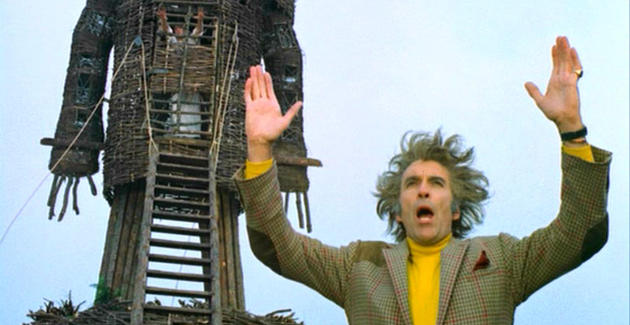
The Drawing Room in the UK is currently hosting their Drawing 2011 – Biennial Fundraiser (exhibition runs from 7 April – 18 May 2011 and ‘close of bidding silent auction event’ is 18 May from 6:30-8:30pm) and I just had to share Darren Banks’ The Wicker Man-inspired contribution:

Public Sculpture for the Masses, 2011 (click the title to go to the bidding page)
Medium: pen over print
Dimensions: 29.7 x 21 cm

Related reading: my essay Get on the Band-wagon: Darren Banks’ mobile cinema