Brendan Flanagan

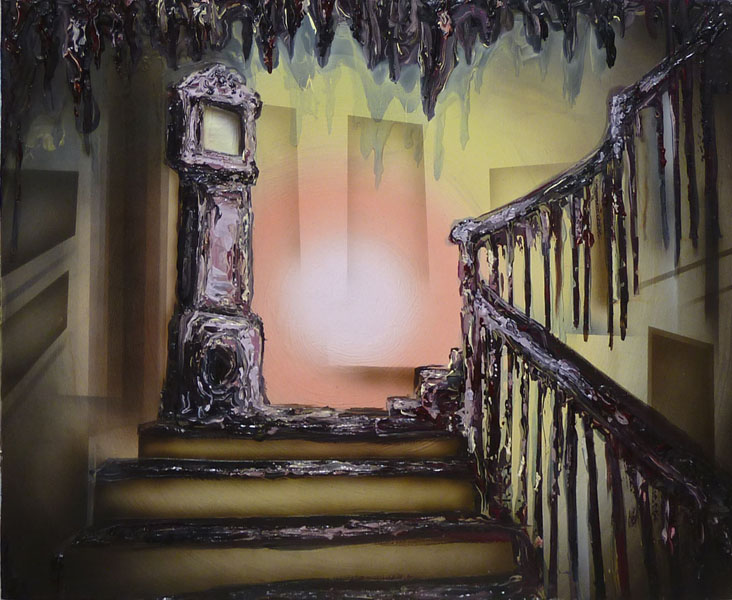
I’m really interested when filmic influences, particularly horror cinema and B-movies, manifest themselves into static images. The paintings of Canadian artist Brendan Flanagan are a recent discovery. The works are architectural, structured, and extremely painterly. Culled from film, photographic, and archival images they are set within a cultural framework yet still quite unsettling.

See his Sightlines solo exhibition that just closed at Thierry Goldberg in New York.

Image: Landing, 2010 – 0il and acrylic on board – 20 x 25 inches (Courtesy of Thierry Goldberg)


Eyes Without a Face: Gillian Wearing and Marnie Weber

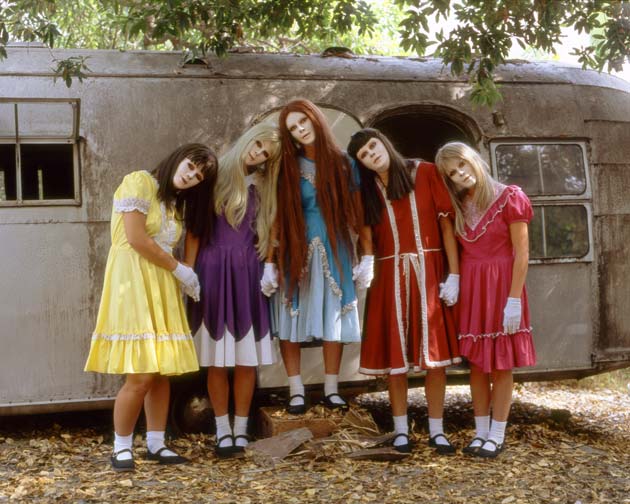
Last night I watched George Franju’s Les yeux sans visage / Eyes Without a Face (1960) on the big screen (thanks BFI) and was struck by how the aesthetics of Christiane Genessier’s mask resonated so strongly in relation to the work of Gillian Wearing and Marnie Weber. There is clearly an in-depth exploration waiting on how the mask functions in horror cinema and art, particularly in relation to women and identity. In the meantime, here are some images:

Final scene in which Christiane Genessier has set things ‘right

Still of the Spirit Girls from Marnie Weber’s Sing Me a Western Song (2007)

Christiane calling her fiance.

Gillian Wearing’s Self Portrait at Three Years Old (2003)

Mike Nelson

Mike Nelson scares me. His installations are claustrophobic and isolating and while no one thing in the elaborately constructed spaces is particularly frightening (clown masks aside), it’s the immediate convergence of all the things that produces an overwhelming intense experience. And I can’t get enough.

I feel like I shouldn’t be in one of Nelson’s rooms, touching and opening doors, searching my way through the maze (not in the literal dark but the tension is just the same). The sense of something being off is palpable and yet, during this feeling of disorientation, I feel totally within my element. Like a good horror film, I feel both displaced and engrossed, enjoying not knowing my way and appreciating the sensory overload provided to me. Indeed, Nelson’s work has a lot in common with the aesthetics and structure of horror cinema such as his employment of architecture and interiors, particularly in the usage of a succession of rooms.

In her essay on Nelson’s Coral Reef (owned by Tate and recently on display at Tate Britain), Helen Delaney says: “Nelson’s use of suggested, open-ended narratives is influenced by filmmakers Sergei Parajanov and Dario Argento, whose ambient, non-linear films present tableaux that absorb and envelop the viewer. The movement from one room to another produces a kind of filmic ‘cut’ between one scene and the next, allowing narrative possibilities to proliferate without coalescing into anything fixed. It triggers a growing sense of unease.”

I could only wander, stop, and stare when encountering his Studio Apparatus for Camden Arts Centre… (1998/2010) at Camden Arts Centre’s now closed exhibition Never the Same River (Possible Futures, Probable Pasts). Consisting of three rooms (dirty entrance walkway and a small reception/office room that led to the larger backyard object extravaganza. In an attempt to focus, record, and re-live the experience I just wrote down all I thought I saw: selection of motorcycle helmets with raccoon takes; slices of science fiction mags; fake flames; slouched body with paper bag head; log fire with face shield, fur, gas cans, wood planks and concreted blocks; space constellations of hubcaps, wire, and balls; latters; antlers; Mickey Mouse with devil antlers; chicken wire; humming radio; fabric mountains; the list goes on.

Each new work I encounter of Nelson’s is a new adventure. I have a long road of discovery ahead when it comes to his work and I’m looking forward to the journey.

Mike Nelson will be representing Britain at the 54th Venice Biennale this summer. Image is from Camden Arts Centre, courtesy of the artist.
Film influences: David Noonan

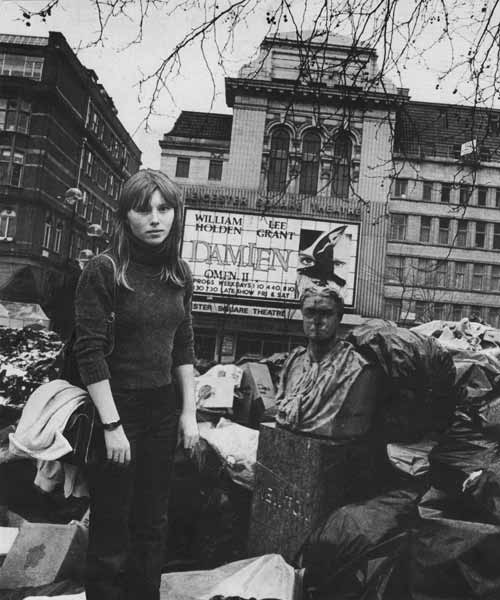
In Frieze’s October 2006 Life in Film London-based artist David Noonan discusses, amongst others, two influential horror films: Susperia and Toby Dammit (which is certainly one of the most surreal and insane Poe adaptations in cinema). Noonan’s screenprints are filmic in themselves. A collage of images from movies, books, and magazines, they are haunting impressions of a scene that vibrate with a sense of performative movement. See his most recent exhibition at David Kordansky Gallery in Los Angeles.

In Suspiria (1977), directed by Dario Argento, an American ballerina enrols in an exclusive ballet school in Germany and becomes embroiled in a witches’ coven bent on chaos and destruction. The art direction is astonishing and overshadows the acting; the film is saturated in a very unnatural palette, which heightens its sense of unreality, right down to the wallpaper designs by Escher. The baroque, flamboyant soundtrack is by the Italian Prog Rock band Goblin and is a masterpiece in itself. The murders are theatrical and balletic; the film is like a violent opera.

Federico Fellinis’ short film Toby Dammit (1968) is part of the trilogy, ‘Histoires Extraordinaire’, also known as ‘Spirits of the Dead’ after a short story by Edgar Allen Poe. The film is complete with Fellini’s trademark references, from circuses to paparazzi, stardom, kitsch and glamour. The film stars Terrence Stamp at his finest: an alcoholic, self destructive thespian lured to Rome to appear in a television show by the promise of a Ferrari – in other words a Faustian pact. Fellini conjures an extraordinary, creepy atmosphere, and Stamp’s crazed, decadent performance makes it all the more powerful.

Image: Leicester Square, 2005, Archival inkjet on paper from paper collage (not one of the more filmic works but one of my favorites)

Thinking Through Cinema (Deep Red)

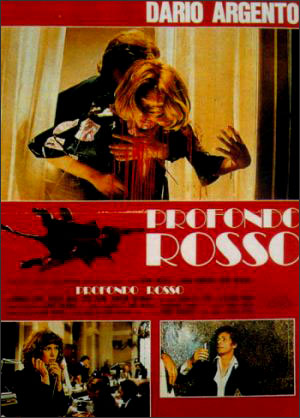
As part of my The Art of Fear post on Dario Argento’s Profondo Rosso, I wanted to highlight LUX’s Thinking Through Cinema (Deep Red) that used the film as the basis for commissioned artworks (film, video, and sound) at last year’s Artissima Art Fair.

For Thinking Through Cinema (Deep Red), LUX’s project at this year’sArtissima Art Fair in Turin, Argento’s film becomes a stand-in for cinema as a whole – a starting point from which to explore the differences between film (as a physical medium) and cinema (as the cultural, architectural and social space in which film has traditionally been experienced).

Six commissioned artists – Meris Angioletti, Juliette Blightman, Claire Gasson, Torsten Lauschmann, Nathaniel Mellors and Emily Wardill – will each present their ‘version’ of Profondo Rosso, using Argento’s film as a source text but perhaps without showing a single frame of the original. The artists’ projects will be presented over the course of the fair as part of a rolling programme of timed events, hosted in a specially constructed space modelled on a cinema auditorium, framed within the fair’s ‘House of Contamination’ strand. Thinking Through Cinema (Deep Red) offers an opportunity for artists to completely reimagine cinema – its history, its limits and its untapped possibilities – from the perspective of both creator and audience.

View installation images here.

Image: Still from Clare Gasson’s 7′ (2010)

The Art of Fear: Profondo Rosso

The presence and absence of artwork in Dario Argento’s giallo classic Profondo Rosso (1975) act as puzzle pieces to solve the murder mystery. The Art of Fear puts it all together…

Profondo Rosso, aka Deep Red, depicts a series of gruesome murders committed by an unknown person (who turns out to be the mother, take that Friday the 13th!) as well as bits of the supernatural, childhood/psychological trauma, and an insane score by Goblin. Like some of the other films included in The Art of Fear, the art featured in Profondo Rosso act as clues or markers to finding the source of horror rather than being the source itself. These clues function in two parts: one as a painting and the other as a child’s drawing. As the narrative evolves, the initial perception of these artworks becomes more complicated for the characters and the audience. However when the revelations contained within each work finally emerge, they reveal not only who committed the murders but also the personal history as to why all this carnage began.

Continue reading

Book Review: The Philosophy of Horror

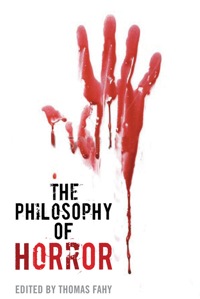
The Philosophy of Horror (2010) makes me wonder if it’s not horror criticism that’s in a bit of a crisis.

With the release of American Horror: the genre at the turn of the millennium and The Philosophy of Horror in late 2010, there was a sudden onslaught of essays that promised fresh perspectives on the horror genre. While American Horror certainly delivered in introducing some of the first texts on horror film produced in the last decade, The Philosophy of Horror (edited Thomas Fahy) regurgitates many of the old philosophies to a seemingly non-horror audience (i.e. it’s very basic). This sameness isn’t productive and it isn’t really re-productive, it’s actually non-productive. A good comparison is the analysis of Land of the Dead seen in both books; Craig Bernardini’s Cronenburg, Romero, Twilight of American Horror Auteur proposed new readings of the evolved zombie in a contemporary context while John Lutz’s Zombies of the World offered an extremely didactic examination.

Continue reading

Frankenstein: Boris Karloff and Iván Zulueta

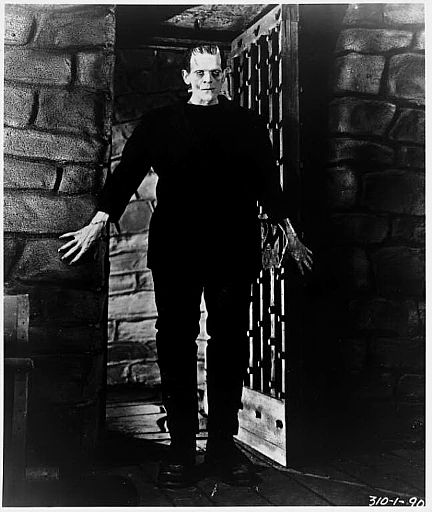
Forty-two years ago horror legend Boris Karloff passed away. Best known for his role in James Whales’ Frankenstein (although I love him best in Mario Bava’s Black Sabbath) Karloff created an image of a complex, self-referential monster that has evolved throughout the decades. In honour of the man, I’ve included below some brief writing on the influence of Frankenstein in relation to Spanish filmmaker Iván Zulueta’s 1972 experimental film Frank Stein.

***
The absorption of the cinematic within Iván Zulueta’s work, Frank Stein and King Kong among them, reacts to the political and social constructs of the 1970s. This is why his version the ‘Frankenstein’ story as subject is so fascinating. Born in the 19th century in a novel by Mary Shelley (Frankenstein 1817), this monstrous tale has been told throughout the decades as a reflection on modern society. In the 1800s, the Frankenstein monster could be read as an allegory on the dangers of scientific explorations or fears of an expanding world. At the dawn of the new decade while the idealism of the 1960s waned, Zulueta’s ‘Frankenstein’ represents the confusion and lapsed innocence of this new world. That Frank Stein is filmed from a television broadcast remarks on the change in media consumption and how its accessibility began to blur the line between information and entertainment. Meaning can seemingly be projected onto this monster in any given era, thereby he perpetually symbolises the recycled, relevant, and rejuvenated spirit of the horror genre.

Read more on Zulueta on a short essay I wrote from LUX called The horror film and contemporary art.

The Art of Fear: Crucible of Terror

Women, money, and revenge are all expressed through art in Crucible of Terror (Ted Hooker, 1971). The Art of Fear explains…

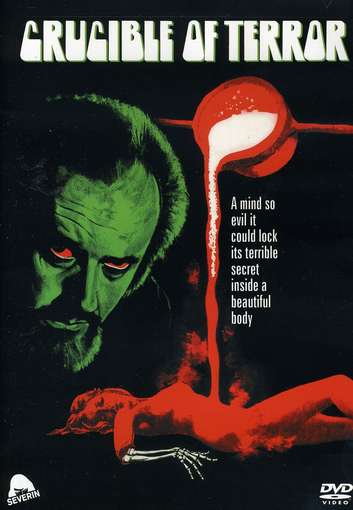
Crucible of Terror is a weird mash up of characters tied together through art and antiquities (paintings, vintage clothes, ancient weaponry) who wind up dead as a result from their relationship to art…and the artist. Unlike our dear Walter in A Bucket of Blood, Victor Clare (played by Mike Raven)* is a true artist who can channel his emotions into paintings, sketches, and into one very mysterious sculpture. In the film’s very first scene we see Victor making this piece, forming a lifeless female body into a seductively lounging pose, covering her in a sealant, and then pouring liquid bronze all over her. Voila!

Continue reading