Book Review: Horror in Architecture

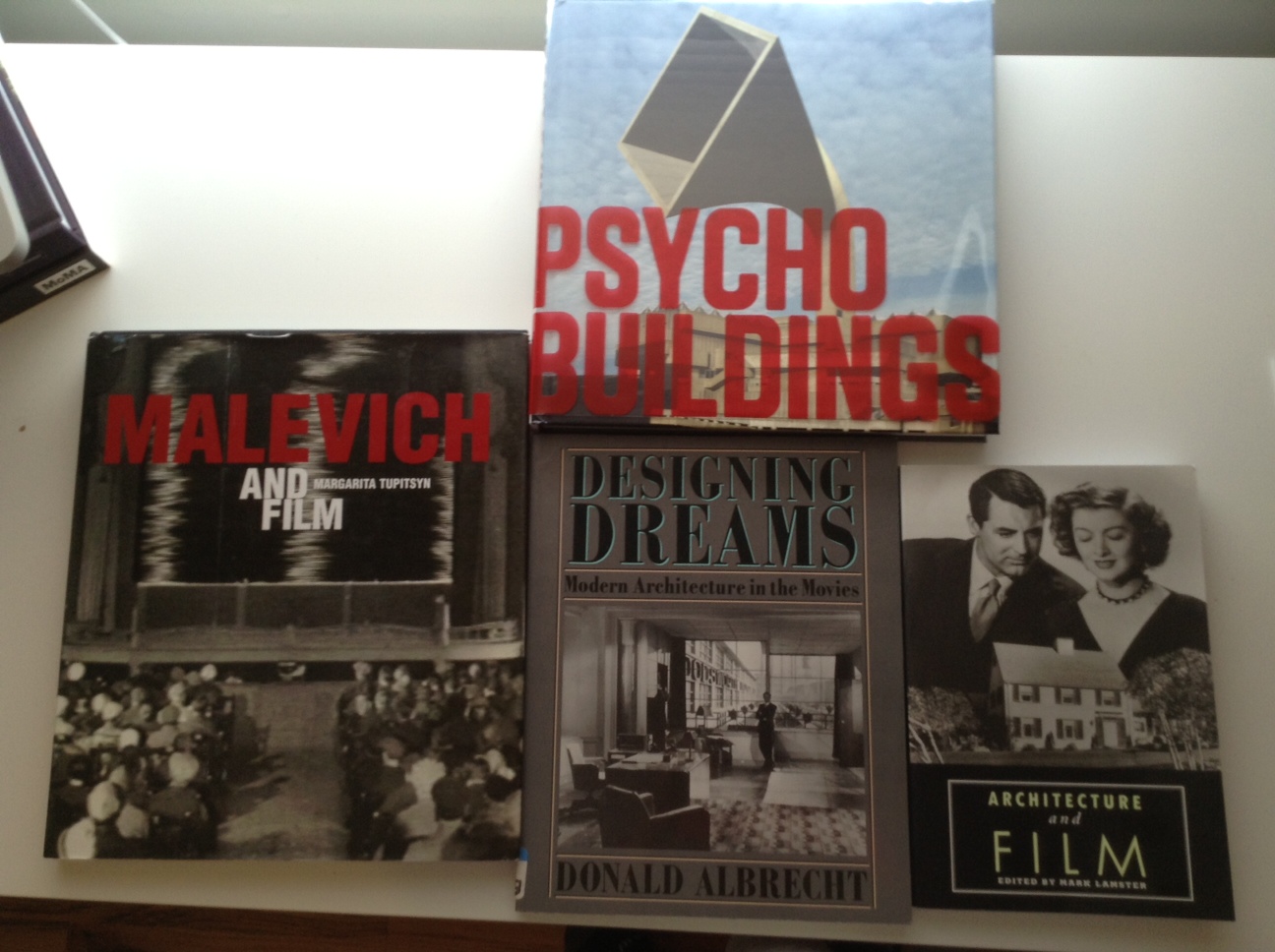
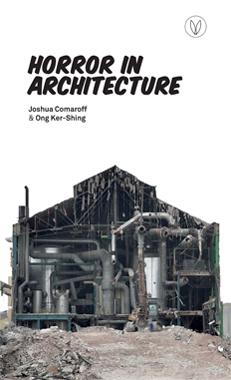
HorrorI had been eagerly awaiting the publication of Singapore-based architects Joshua Comaroff & Ong Ker-Shing’s new book Horror in Architecture for months as it specifically addresses the two very things I’m currently researching: horror and architecture. The book’s introduction nails a correlation between “horror” and the sublime, an idea that I usually discard because of its cathartic and religious implications but presenting the two as being both unknowable, spectral and inexplicable but extremely palpable is quite convincing. “Horror is the truth about abstraction” is another provocative statement that also rings true when considering how horror “weirds” what is familiar. From there, their discussions of the double, disjunction, repetition, deformation, interior/exterior are certainly of interest if perhaps all too brief.

Horror in Architecture seems particularly interested in relating architecture to the monstrous, a valid correlation that loses its poignancy when the authors continuously refer to Mary Shelley’s monster as “Frankenstein” when, in fact, “Frankenstein” is the young mad doctor. Along with the green face, bolts to the neck, and flat head, it’s a pop-culture adaptational norm to call the monster “Frankenstein” but it’s still glaringly incorrect. While I would argue that Dr. Frankenstein is perhaps even more monstrous that the monster he created, it’s hard to overlook this error and to trust further concepts they put forth that I’m unfamiliar with.

Aside from other general editorial issues (wrong words, doubling of words, incorrect spacing), the book really omits the real source of architecture’s horror by offer only a cursory address of economics and capitalism in relation to buildings, culture, and society. Horror very pointedly tackles socio-political issues of its time and, with the immediacy of architecture to the population and the economic context in which houses, businesses, and skyscrapers are built, it would seem fundamental in a discussion about how architecture embraces the horrific. For instance, what could be more horrifying than neglected public housing complexes ala Candyman (Bernard Rose, 1992)? Politics, economics, society – these are all fundamental elements to why horror and architecture exist and, most importantly, what they represent.

What we must take-away from Architectural Horrors is an idea proposed towards the beginning: ”…all present the possibilities of deviant architecture as an opening into new worlds of form, composition, space-making, program and hierarchy.” As scholars, filmmakers, authors, and artists use horror to establish an understanding of the world around us, it therefore seems crucial to consider the relationship between our built environment and horror as a productive site of contemplation and of future possibilities.
Psycho Buildings

tumblr_ky7ghuxrPn1qahyrjo1_1280

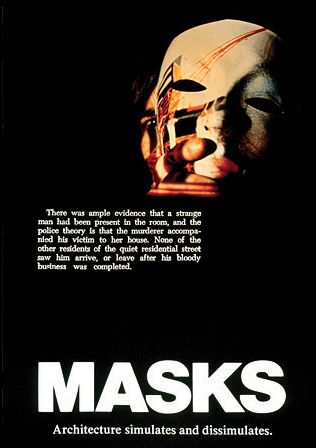
“Here, we find architecture not in its functional guise but as a site of desire, memory and doubt, home to personal contingencies and collective histories, the clashing of cultures and coalescing of subjectivities. Refusing to address us in the spaces they generate, engaging us in ways that are at once visceral and conceptual, and that call attention to what must be experienced rather than merely seen.” – Ralph Rugoff, Psycho Buildings from the exhibition Psycho Buildings: Artists Take On Architecture.

Image: Mike Nelson, To the Memory of H.P. Lovecraft (1999), 2008.

Aida Ruilova – GONER (2010)

yasly_goner_a

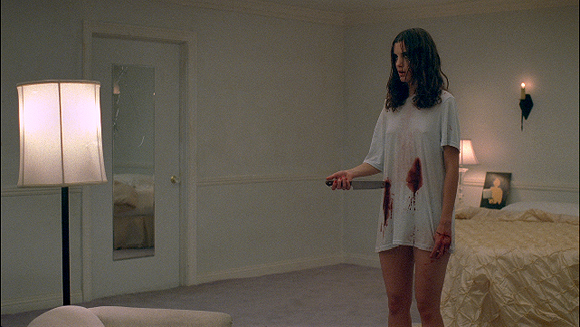
Quiet, guttural, and violent, Aïda Ruilova’s Goner (2010) is an intimate and full throttle engagement with the unknown. A young woman, clothed in only a long t-shirt and underwear, is covered in blood and alone in a bedroom. Laying face down when we first see her, with gashes at her ankles, the battle between her and the room in which she’s contained plays in an endless loop. Punching, stabbing, screaming, staring; she fights the small world around her. Heightening the sense of unease and inescapable containment are the ambiguities as to whether she is really alone, who or what is assaulting her, or if the room is even hers. Camera perspectives shift from an all-seeing eye to a personal gaze that becomes our own. The perverse imagination runs wild.

tumblr_mkvtrkWKDr1ri8asco1_500From the aesthetics and narrative established in the Italian giallo to the cliche tropes in the American slasher, Aïda Ruilova embodies the cinematic history of the horror film girl in under ten minutes. Goner is a rather forceful gesture towards acknowledging all the cultural and political implications associated with the complicated role of the young woman in horror film (the ‘final girl’, the survivor, the redeemer, the victim). Her evolution of weakness to strength unfolds before us as she becomes unwittingly involved in a landscape of life and death. At once an indulgence in stereotype and a liberation from that stereotype, the horror heroine is a violent and hyperreal representation of what is means to be a woman in the world.

129581229_640

And what better space to pinpoint this disjuncture between the life and death of women than in the architectural realm of the home, the bedroom? With a heart shaped bed, the girl in Goner is in a position of desire and longing but as the room distorts, the idea of pleasure becomes one of intense pain. Here the psychological discord of a woman coming undone in her own home echos the sad intensity of Roman Polanski’s Repulsion (1965) in which a beautiful woman loses her insanity when alone and trapped in her apartment. It also makes reference to the physical and sexual assaults inflicted on a young mother by and invisible and ghostly being in 1982’s The Entity. Spanning one hundred years and as many films, from F.W. Murnau’s Nosferatu (1922) to the current The Conjuring (2013), domesticity is the psychological realm where horror and women confront each other head on. This inextricable link between horror, the home, and women is the structural support of Goner as the mystery between a young girl and a living space rages on.

Watch Goner here.

I Remember Things

I remember things. It’s more than just void, darkness, unconsciousness. The mind does work. There are images, patterns, things to recollect. It’s not just the long, deep sleep that comes when the fear has left. The cold is felt, the slipping away of feeling is noted and then succumbed to. The mind functions. Time is distorted, jumbled, telescoped, accordioned, but there is a sense of time even so, and I remember things. I remember the way it began. I remember the way it was in the beginning. – Twilight Zone, The Long Morrow.

Blackness. The Void. Empty Distances.

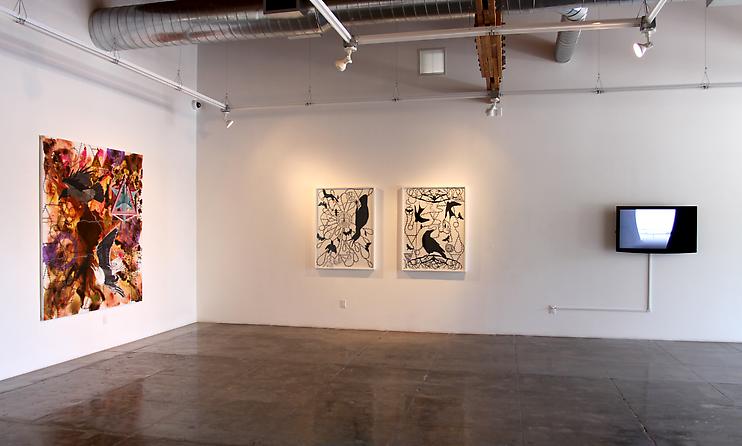
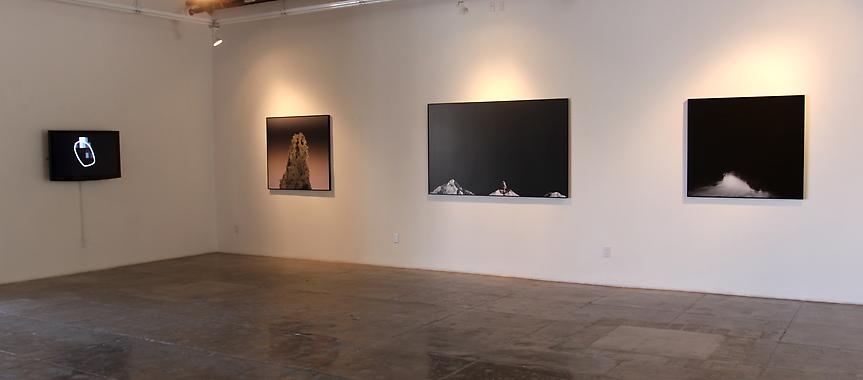
Essay written for Empty Distancesthe exhibition I curated for Mark Moore Gallery in Los Angeles (June 15 – July 22, 2013)

EDinstall51

Out of the darkness, the void emerged and invaded modern art with Russian artist Kazimir Malevich’s painting Black Square in 1915. As the totalization of everything and nothing at once, this landmark painting is infinite space represented on a flat plane. A undefinable negation that is at once cinematic and static, it is not a representation of the void but the void itself. A reduction of form and content to an absolute essence, Black Square conveys a simultaneous flattening and infinite expansion of space. Just as when the screen goes dark in the cinema, representations of distance are made palpable. There is horror within this unknown space. It is an empty distance.

hm4_1_30_0_bigIt has almost become a special art to paint empty space, to make it palpable, and to develop variations upon this singular theme. Not only are there pictures upon which almost nothing is painted, not only is it an essential feature of their style to make the strongest impression with the fewest strokes and the scantiest means, but there are very many pictures especially connected with a contemplation to impress upon the observer the feeling that the void itself is depicted as a subject, it is indeed the main subject of the picture….

For Void is, like Darkness and Silence, a negation, but a negation that does away with every this and here, in order that the wholly other may become actual. – Rudolph Otto, The Idea of the Holy: an inquiry into the non-rational factor in the idea of the divine and its relation to the rational (1923)

Nearly one hundred years after Black Square and Otto’s The Idea of the Holy, the void takes on new meaning in contemporary art and film. While Empty Distances stems from art historical traditions of emptiness as subject (think Yves Klein’s La spécialisation de la sensibilité à l’état matière première en sensibilité picturale stabilisée, Le Vide in 1958 or Michael Asher’s wall removal at Claire Copley Gallery in 1974), philosophically this exhibition is a provocation to rethink the void’s meaning by considering it in post-apocalyptic terms.

Taking 20th century theologian Rudolph Otto’s phrase “empty distance” and idea that the very act of pictorially depicting the void establishes darkness and silence as subject itself, Empty Distances positions itself at the collapse of society. The recent global financial crisis, governmental overthrows in Egypt and Libya, and the current protests in Istanbul’s Taksim Square (violent repercussions of human-produced horrors) have taken us to the other side; we are living in a post-apocalypse. But within this cyclical fall and rise of society is the promise a new future or, at the very least, an imagining of a different future that is both dependent and secluded from the past. Films like Night of the Living Dead (1968) and The Bed Sitting Room (1969) along with artworks like those in Empty Distances are able to provide unthinkable visualizations of what a new society would look like and, in context with current international events, suggest that we may already be living in a brave new world, only we don’t realize it yet.

Similarly, Eugene Thacker challenges a horrifying consideration of the spectral and speculative “world-without-us” in his book In the Dust of this Planet: Horror of Philosophy Vol. 1. Empty Distances takes Thacker’s provocation to task, arguing that through artistic representation we can imagine this horrifying and unthinkable realm devoid of humans (due to the cataclysmic fault of man, a world that either pre-dates man, or as a realm that exists independently of man) where the planet continues on its path of existence alone. Importantly, the attempt to reveal this void involves a spatial collapse and this is the where empty distances emerge. Through the influences of Black Metal, horror films, science fiction, scientific research, and magic realism, the artworks in Empty Distances connote a surface negative while implying infinite vastness. They provoke such diverse imaginings of a post-apocalyptic world through the depiction of the void, pulling the viewer into a speculative new world.

EDinstall11

Continue reading

Art in Horror Film: The Secret of Dorian Gray

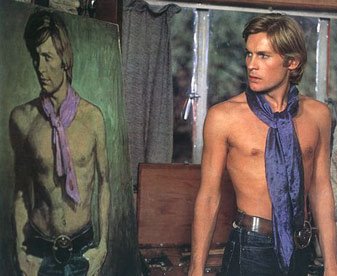
Oscar Wilde’s The Portrait of Dorian Gray is the quintessential merger of visual art and horror. The classic British tale of a young man and his portrait painting that houses all of his evil doings gets the Italian horror film treatment (and a cravat) in this 1970 movie directed by Massimo Dallamano.

[vimeo 22043367 w=500 h=281]

Previous posts on Dorian Gray include Yinka Shinobare – Dorian Gray and The Art of Fear – Dorian Gray.

dorian460

Skulls: repetition and representation

For some reason it always comes back to Bava. And while I know that the skulls in Mike Nelson’s exhibition More things (To the memory of Honore de Balzac) is not a direct reference to the skeletal figure in Mario Bava’s Planet of the Vampires (itself a direct influence on Alien), the similarity between scale and presence is striking.
IMG_0030

Planet-of-the-Vampires-giant-skull

IMG_0024

Planet of Vampires 5

Part of the Repetition and Representation series. 

Hill House: a house personified

No Human eye can isolate the unhappy coincidence of line and place which suggests evil in the face of the house, and yet somehow a maniac juxtaposition, a badly turned angle, some chance meeting of roof and sky, turned Hill House into a place of despair, more frightening because the face of Hill House seemed awake, with a watchfulness from the blank windows and a touch of glee in the eyebrow of a cornice. Almost any house, caught unexpectedly or at an odd angle, can turn a deeply humorous look on a watching person; even a mischievous little chimney, or a dormer like a dimple, can catch up a beholder with a sense of fellowship; but a house arrogant and hating, never off guard, can only be evil. This house, which seemed somehow to have formed itself, flying together into its own powerful pattern under the hands of its builders, fitting itself into its own construction of lines and angles, reared its great head back against the sky without concession to humanity. It was a house without kindness, never meant to be lived in, not a fit place for people or for love or for hope. Exorcism cannot alter the countenance of a house; Hill House would stay as it was until it was destroyed. – The Haunting of Hill House (Shirley Jackson, page 24).