Burnt Offerings: Gary Simmons and Karen Black

As a precursor to their Bloody Women panel discussion tomorrow night, the ICA London asked the Twitter-verse to name our favorite horror ladies (mine: Barbara Steele, Dara Nicoladi, Karen Black), and it sparked thoughts on how the role of the women and even the “Final Girl”often directly manifests in artists’ work too.

Take Gary Simmons frenetic paintings in his 2010 exhibition Midnight Matinee where images from the Texas Chainsaw MassacrePsychoAmityville Horror, and Burnt Offerings referenced familiar architectural places found in horror films: the house, the gas station, and the cinema. Interestingly the paintings themselves mimic filmstrips, a further collision of art and film. And if you’re wondering how this relates to women…

I’m just beginning research on the role of architecture in visual art stemming from a direct relationship to horror cinema (think of the aforementioned Simmons, Mike Nelson, etc). Amongst other structural functions such as spatiality and establishing a sense of unease within the familiar, the house/home in horror films challenges the forced and/or changing ideas of domesticity throughout the decades. One example of this is also one of the films Simmons references, Burnt Offerings (1976) starring my horror heroine Karen Black. The movie is about a young family who takes care of a mysterious house one summer to escape the city however they wind up as literal house food. The house kills most of family, save Black’s character, who is gradually yet forcibly absorbed into the house becoming its official “mother” and caretaker. The film can be read as a reaction to second wave of feminism in the United States, a return back to traditional and fundamental women/mother/Victorian ideals.

Simmon’s usage of the Burnt Offerings house facade reinforces the notion that we (i.e. the audience, viewer, or visitor) can never really judge a book by its cover; that what lurks behind the front door to an old house or behind the cinema screen curtain can be an unexpected yet real horror. His blurred reflection of the house establishes a visual tension that reminds us that physical and mental ‘interiors’ are infinitely complicated and that there can be a serious danger in the projected appearance of perfection.

Images:
Gary Simmons Burnt Grid, 2010 – Pigment and charcoal on paper – 12 panels
Still of Karen Black in Burnt Offerings (Dan Curtis, 1976)
Gary Simmons Between Offerings, 2010 – Pigment, oil paint and cold wax on canvas

Tick Tock: Christian Marclay’s “The Clock” at BAS7

Brief writing on Christian Marclay’s The Clock (2010) as seen in the British Art Show 7 (currently on view at the Hayward Gallery).

Christian Marclay’s The Clock is so much more than an awareness of literal time. Certainly, the onscreen images constantly remind us that we’re in the here and in the now. In the theatre we become weighted in this moment through the succession of each passing minute flickering before us. Something occurs beyond this explicit notion of the clock ticking however, something that extends out of the undercurrent theme of death and waiting. What unfolds is an idea of time as a (pop)cultural marker and reference point for the viewer that gives The Clock its pulse.

The Clock is a 24-hour single channel video that includes thousands of scenes from film and television (silent era to the very recent) that reference the time, each minute that passes on screen in the same minute passing for us in the audience. Fragmented time becomes a synchronized event. It’s a powerful and enjoyable experience to watch briefly our favorite movies, bask in recognizing certain actors (Vincent Price, Peter Falk!), episodes, and places; Marclay’s fluidity in joining these scenes definitely makes for highbrow channel surfing sensation. Because of this, a question is posed: is it our familiarity with these references that signifies the true relationship to time in The Clock? In thirty, fifty, eighty years from now viewers will view The Clock as its own frozen moment in time without any filmic sources of that particular future time? Will the work become pastiche or evolve in meaning?

Time is very much a universal construct and personal experience, changing as we get older and our life evolves. Boredom, love, hate, youth, excitement, all effect our perception of how long or short any given period of time feels to us. In this way, I would think of The Clock as being eternally temporal. A post-modern composition of familiar faces, places, and films that itself will change in its meaning throughout the decades, always with the grounding reminder of finitude, to become an object to be absorbed by future artists, watchers, and nostalgic revelers.


Horror films and art museums

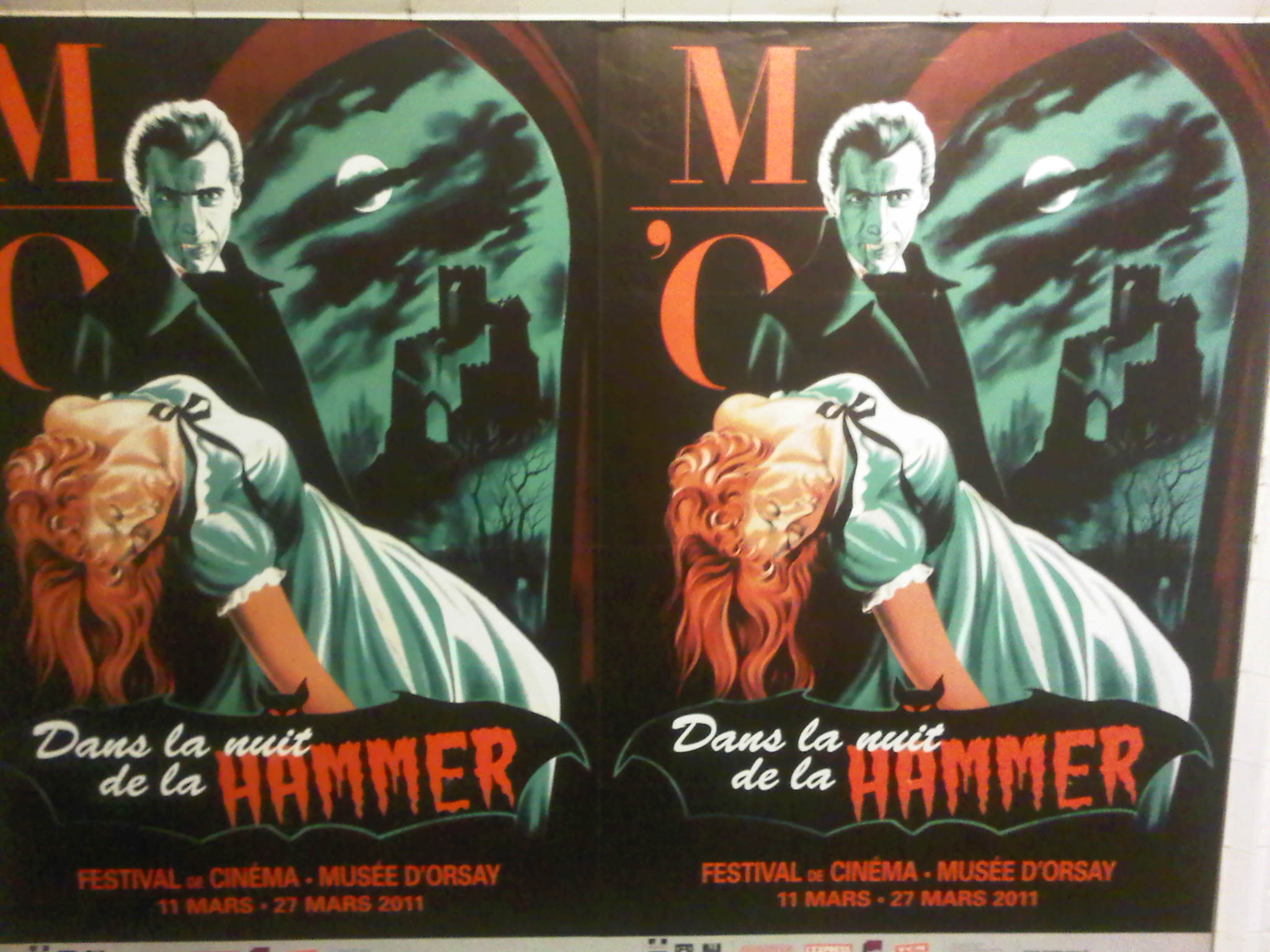
Early this week a friend of mine sent me this photo he had taken of a street poster in Paris for the Musée d’Orsay’s In the Night of Hammer (a two-week screening series of classic Hammer Horror films) and it got me thinking about how horror cinema often finds itself situated in an art institution. Romero’s Night of the Living Dead (1968) founds critical stature in the United States after a screening at the Museum of Museum Art, an institution who has shown the film throughout the decades and who acquired a print for their collection in 1980. Recently it’s become noticeable that in London there have been frequent showing of horror films in galleries. Inspired to dig a little deeper as I explore the relationship between horror and art, I’ve compiled a [growing] list of non-Halloween related horror screenings in art and film institutions (after the jump):

Continue reading

The Art of Fear: Bluebeard

In Edgard G. Ulmer’s brilliant and beautiful film Bluebeard (1944), artist Gaston Morrell deals with the failure of finding pure beauty in his paintings by killing his muses. The Art of Fear on the artistic practice of a serial killer…

A spectacularly dark mixture of noir and horror, much like Ulmer’s previous film The Black Cat (1934), Bluebeard is a revenge story. John Carradine plays Gaston Morrell (aka “Bluebeard”) in one of his rare leading male roles, an artist so scarred by the revelation that his ultimate muse is a “loathsome creative” that he kills her. This woman, whom he had rescued and nursed back to health after an accident, was the source of what he believed to be his greatest achievement in painting. After her murder, Gaston becomes fundamentally broken. Unable to escape the pain she had inflicted, whomever else he painted turned into a representation of her…and so he killed them too. She continually haunted him, controlling his downward spiral in artistic practice, ability to love, and mental stability.

Continue reading

Eyes Without a Face: Gillian Wearing and Marnie Weber

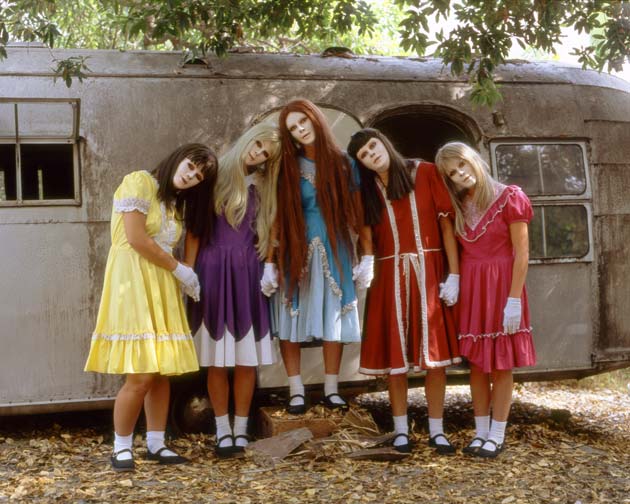
Last night I watched George Franju’s Les yeux sans visage / Eyes Without a Face (1960) on the big screen (thanks BFI) and was struck by how the aesthetics of Christiane Genessier’s mask resonated so strongly in relation to the work of Gillian Wearing and Marnie Weber. There is clearly an in-depth exploration waiting on how the mask functions in horror cinema and art, particularly in relation to women and identity. In the meantime, here are some images:

Final scene in which Christiane Genessier has set things ‘right

Still of the Spirit Girls from Marnie Weber’s Sing Me a Western Song (2007)

Christiane calling her fiance.

Gillian Wearing’s Self Portrait at Three Years Old (2003)

The Art of Fear: Profondo Rosso

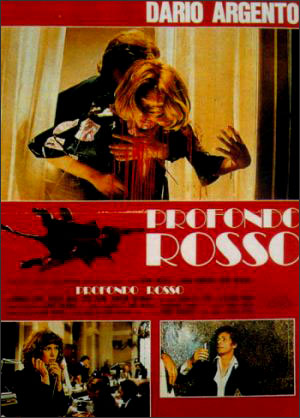
The presence and absence of artwork in Dario Argento’s giallo classic Profondo Rosso (1975) act as puzzle pieces to solve the murder mystery. The Art of Fear puts it all together…

Profondo Rosso, aka Deep Red, depicts a series of gruesome murders committed by an unknown person (who turns out to be the mother, take that Friday the 13th!) as well as bits of the supernatural, childhood/psychological trauma, and an insane score by Goblin. Like some of the other films included in The Art of Fear, the art featured in Profondo Rosso act as clues or markers to finding the source of horror rather than being the source itself. These clues function in two parts: one as a painting and the other as a child’s drawing. As the narrative evolves, the initial perception of these artworks becomes more complicated for the characters and the audience. However when the revelations contained within each work finally emerge, they reveal not only who committed the murders but also the personal history as to why all this carnage began.

Continue reading

The Art of Fear: Crucible of Terror

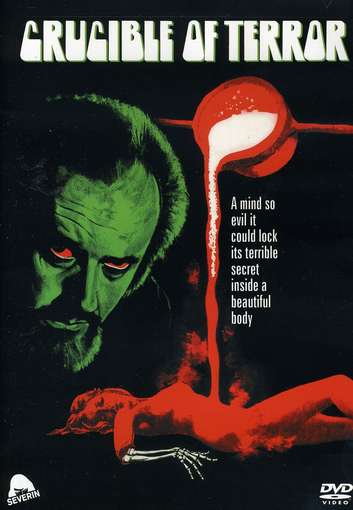
Women, money, and revenge are all expressed through art in Crucible of Terror (Ted Hooker, 1971). The Art of Fear explains…

Crucible of Terror is a weird mash up of characters tied together through art and antiquities (paintings, vintage clothes, ancient weaponry) who wind up dead as a result from their relationship to art…and the artist. Unlike our dear Walter in A Bucket of Blood, Victor Clare (played by Mike Raven)* is a true artist who can channel his emotions into paintings, sketches, and into one very mysterious sculpture. In the film’s very first scene we see Victor making this piece, forming a lifeless female body into a seductively lounging pose, covering her in a sealant, and then pouring liquid bronze all over her. Voila!

Continue reading

Book: ‘American Horror Film: The Genre at the Turn of the Millennium’

Horror’s not dead! Long musing on American Horror Film: The Genre at the Turn of the Millennium…

American Horror Film: The Genre at the Turn of the Millennium (edited by Stefen Hantke) is a provocation on the status of American horror cinema through discussing and analyzing films and trends from the last decade. I’d been anxious to read this anthology after reading Hantke’s essay Academic Film Criticism, the Rhetoric of Crisis, and the Current State of American Horror Cinema: Thoughts on Canonicity and Academic Anxiety. Split into three sections – 1) Bloody America: Critical Reassessments of the Trans/-national and of Graphic Violence; 2) The Usual Suspects: Trends and Transformations in the Subgenres of American Horror Film; 3) Look Back in Horror: Managing the Canon of American Horror Film – it’s a breath of much-needed fresh air, relocating academic focus from the 1960/70s into the present.

Continue reading

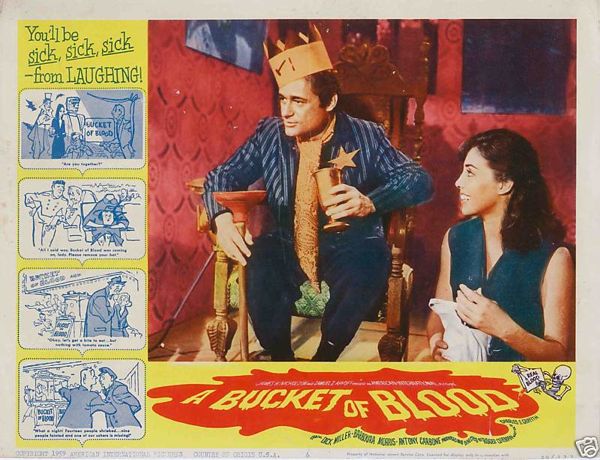
The Art of Fear: A Bucket of Blood

Who says the art world isn’t scary? The Art of Fear takes on Roger Corman’s classic A Bucket of Blood.

If there’s a better satirical film on the art world than A Bucket of Blood (1959) then I certainly haven’t seen it (Pecker and Untitled come close-ish). Corman’s hilarious jab at the beatnik artist types of the 1950s easily translates into the ridiculousness of today’s contemporary art world. Though made by the ‘King of B-movies’ and reportedly made for a mere $50k, A Bucket of Blood is a thoughtful and provoking look at the beginning of contemporary art as cultural phenomenon. It owes a lot to House of Wax in its relationship to revenge and the frustrating experience of creating artwork whether the artist is deformed as in House of Wax or without talent as in A Bucket of Blood. However, it quite cleverly mimics the capriciousness of the art world. As Sarah Thornton writes in her enthnographic study Seven Days in the Art World, ‘It’s [the contemporary art world] structured around nebulous and often contradictory hierarchies of fame, credibility, imagined historical importance, institutional affiliation, education, perceived intelligence, wealth, and attributes such as the size of one’s collection.’[1] More than fifty years after its release, the satire in A Bucket of Blood is still relevant and relatable.

Continue reading

The Art of Fear: The Fall of the House of Usher

Family portraits in The Fall of the House of Usher encapsulate the Usher’s ‘plague of evil’.

The second film for The Art of Fear is Roger Corman’s vibrant The Fall of the House of Usher or House of Usher (1960) starring the estimable Vincent Price. Like The Picture of Dorian Gray the film adapts a literary classic, Edgar Allen Poe’s short story of the same name published in 1839. It is the first of eight movies Corman would use Poe, sometimes adding a little H.P. Lovecraft into the mix, and besides The Masque of the Red Death it is the best of the bunch. Paintings actually factor in many of the Corman/Price/Poe movies – remember the watchful painting of the ‘dead’ wife in The Pit and the Pendulum (1961) and the looming ancestral portrait in The Haunted Palace (1963). Considering Corman’s original A Bucket of Blood (next feature on AOF), perhaps he has an art fetish!

Continue reading