The Art of Fear: The Fall of the House of Usher

Family portraits in The Fall of the House of Usher encapsulate the Usher’s ‘plague of evil’.

The second film for The Art of Fear is Roger Corman’s vibrant The Fall of the House of Usher or House of Usher (1960) starring the estimable Vincent Price. Like The Picture of Dorian Gray the film adapts a literary classic, Edgar Allen Poe’s short story of the same name published in 1839. It is the first of eight movies Corman would use Poe, sometimes adding a little H.P. Lovecraft into the mix, and besides The Masque of the Red Death it is the best of the bunch. Paintings actually factor in many of the Corman/Price/Poe movies – remember the watchful painting of the ‘dead’ wife in The Pit and the Pendulum (1961) and the looming ancestral portrait in The Haunted Palace (1963). Considering Corman’s original A Bucket of Blood (next feature on AOF), perhaps he has an art fetish!

Continue reading

The Art of Fear: The Picture of Dorian Gray

In The Picture of Dorian Gray – a young man’s debauchery and vice manifests in his portrait after his wish to remain young is mysteriously granted.

We’re starting off The Art of Fear with one of my personal favorites and one of the strongest examples of art in horror cinema, Albert Lewin’s The Picture of Dorian Gray (1945). It’s based on Oscar Wilde’s delicious 1891 novel of the same name and, with some small variations, stays pretty true to the original narrative.[1] On that note, I want to clarify that this discussion is on the 1945 film version so any deviations and changes from the literary language or subsequent remakes are not considered.

The story goes like this: Dorian Gray is a young man so distraught after realizing that his portrait, painted by friend Basil Hallward, would always exist in a beautiful youthful moment while he would eventually age and whither that he manages to magically transmit the residue from his ‘lust for life’ experiences onto this painting. Meaning that the painting would bare the brunt of these actions, turning ugly and old while Dorian remained the same. His decades-long reign of the 19th century’s version of ‘sex, drugs, and rock-n-roll’ (and murder) leads him down many regretful paths. He tortures himself by viewing each of the portrait’s new evil transformations but revels in his cheating of death. It’s only until a young woman believes in his goodness that he, rather forcibly, expels his history from the painting back onto himself and dies a hideous old man.

Continue reading

Chris Baldick’s intro to ‘The Oxford Book of Gothic Tales’

In this introductory text for ‘The Oxford Book of Gothic Tales‘, Baldrick establishes his argument for Gothic in literature (I look at how it differs structurally from horror). He historicizes the Gothic and explains its transformations over the years into what we recognize it as today. Therefore he establishes history and defines Gothic:

For the Gothic effect to be attained, a tale should combine a fearful sense of inheritance in a time with a claustrophobic sense of enclosure in space, these two dimensions reinforcing one another to produce an impression of sickening descent into disintegration. p xix

Defines Gothic as three things that inter-relate: 1) tyranny of the past 2) stifles the hopes of the present 3) within dead end physical incarnation.

Old buildings as sites of human decay (mansions).

I ask: so what happens when the horror shift is made away from the Gothic fantasy and moved into our realm of the real, homes and neighborhoods? Horror exists in the (ever) present, gothic looks to the past that has found its way into the present.

Horror’s Collective Memory: Gregory Waller ‘Introduction to American Horrors’

“Taking the horror film as our guide we can and should begin to rethink the nature of ‘influence’ and ‘imitation’ and the meaning of ‘genre’ and ‘formula’ in contemporary popular culture – in so doing we inevitably rethink our own understanding of horror as well”

Gregory A. Waller, ‘Introduction’ from American Horrors (1987, University of Illinois Press) reproduced in The Horror Reader.

Paul O’Flinn ‘Production and Reproduction: the case of Frankenstein’

An extract of Paul O’Flinn’s ‘Production and Reproduction: the case of Frankenstein’ is featured in The Horror Reader, edited by Ken Gelder.

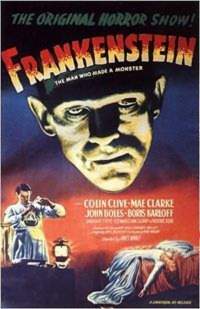
Having only recently read Mary Shelley’s Frankenstein for the first time I’ve been interested in how this monstrous character has morphed from being a damaged, repulsive, complex revenge-killer into a green, not responsible for his actions, somewhat lovable mute throughout popular culture; even so much as we now collectively associate the monster as “Frankenstein” when that name really belongs to the Doctor. This metamorphosis occurs through a shifting of mediums (from novel to film) and through a change in contemporary social climates; Frankenstein becomes a site of re-production and a mimetic vessel for each new time period. To me, this reflects the continuous and self-generative/reflexive nature of the horror genre itself all manifested in one big monster metaphor.

Notes are after the jump…

Continue reading

‘Shocking Representation’ notes

Shocking Representation: Historical Trauma, National Cinema, and the Modern Horror Film‘ by Adam Lowenstein

Just finished this book yesterday (9 January 2010). It discusses through film examples how historical trauma is reflected in the allegorical moment in film narrative where the past collides with the present in the eyes of the spectator. It moves away from a modernist reading of trauma as being a proper way to work though and towards a more post-modern/realist reading previously thought to be unhealthy. It establishes a conflation between ‘art genre’ and ‘horror genre’ in regards to trauma representation in cinema (how even art films tend towards the spectacle, how can it not, when showing something horrific). The author ‘shifts cinema’s relation to history from compensation to confrontation.’

Continue reading